

Rental Property Plumbing Checks: Common Issues Brisbane Property Managers Should Not Ignore
Plumbing problems in rental properties rarely remain isolated issues. A slow leak beneath a sink can damage cabinetry and flooring, a partially blocked drain can develop into an emergency callout, and inconsistent hot water can quickly lead to tenant concerns. For property managers, these issues extend beyond routine maintenance. Through professional inspections and practical recommendations, plumbers in Brisbane can identify developing faults before they result in significant damage, disruption or expense.
Plumbing Inspectors outlines the essential plumbing checks that should form part of routine property inspections and tenant changeovers. This includes visible leaks, slow drainage, moisture damage, deteriorating flexible hoses, water pressure changes, hot water concerns and stormwater warning signs. Understanding these indicators helps property managers decide which issues require immediate attention and when a specialist plumbing inspection should be arranged.
Routine property inspections can identify visible warning signs, but they do not replace assessment or diagnosis by a licensed plumber. Property managers should avoid dismantling, pressure-testing or repairing plumbing components themselves.
Leaks Around Taps, Toilets and Under-Sink Areas
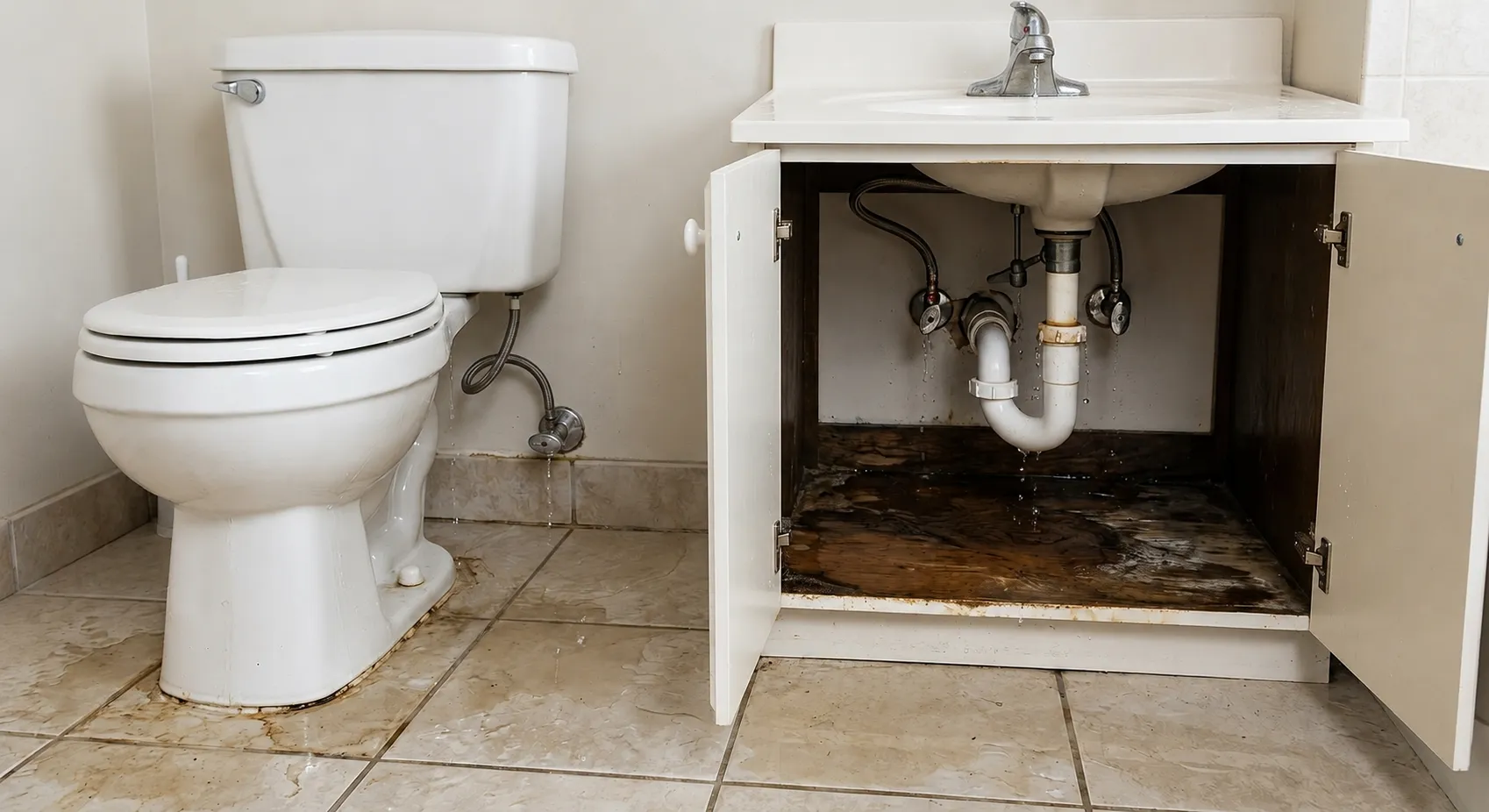
Leaks in wet areas are among the most common plumbing problems in rental properties. Even a minor drip can eventually damage cabinetry, flooring, skirting boards and surrounding building materials.
Property managers should include leak checks in routine inspections and entry and exit condition reports. Tenants may not notice concealed leaks or may assume that a small amount of moisture is insignificant. Clear photographs and maintenance notes create a useful record and help ensure developing problems are addressed promptly.
Common Signs Around Taps and Mixers
Checks around kitchen, bathroom and laundry taps should begin at the bench surface and continue into the cabinetry below. Warning signs include:
- Water staining or swelling around the base of a tap
- Loose or unstable tap bodies
- Moisture or mould where a bench meets the splashback
- White, green or blue-green deposits around joints
- Dripping from the spout after the tap has been turned off
- Water emerging from beneath the tap flange
- Handles that are difficult to turn, squeal or require excessive force
- Noticeable changes in water pressure or temperature
Stiff handles and ongoing drips may indicate worn washers, seals or mixer cartridges. Mineral deposits around connections can also indicate slow seepage that has been occurring for some time.
Flexible supply hoses and isolation valves beneath sinks should be visually checked for rust, staining, bulging or fraying. These components remain under water pressure and can cause substantial internal damage if they fail.
Toilets: Cistern, Base and Hidden Seepage
Toilets present several leak risks that are easily overlooked.
Constant water running into the bowl may indicate a faulty inlet or outlet valve within the cistern. This wastes water, can stain the bowl and may create ongoing noise for tenants. A licensed plumber can confirm the fault and repair the internal components.
At the base of the toilet, look for:
- Water staining around the pan
- Persistent dampness
- Soft or swollen flooring
- Unpleasant odours
- Visible movement or loose fixings
A damaged pan connection or seal may allow wastewater to seep into the surrounding floor or subfloor. Property managers should avoid pushing or manipulating the toilet during an inspection. Any visible movement or evidence of leakage should be referred to a plumber.
Behind and beside the toilet, inspect the water supply connection and isolation valve. Corrosion, pitting or green staining around joints may indicate long-term seepage.
Under-Sink Cabinets and Surrounding Surfaces
Under-sink areas in kitchens, bathrooms and laundries often conceal slow leaks. Where accessible without disturbing tenants’ belongings, property managers should inspect the cabinet base and rear corners.
Signs of moisture exposure include:
- Swollen or delaminated chipboard
- Bubbling laminate
- Black spotting
- Rusted fittings
- Damp surfaces
- A persistent musty smell
When fixtures are being used, visible joints can be observed for dripping around traps, appliance connections and the underside of sinks or basins. In properties with stone benchtops and undermount sinks, failed silicone seals may allow water to enter the cabinetry.
Mould or substantial moisture beneath a sink should be treated as a maintenance priority. The plumbing source should be repaired before drying, cleaning or replacing damaged materials.
Slow Drains, Gurgling Sounds and Recurring Blockages
Slow drainage, gurgling noises and recurring blockages often indicate that a waste or sewer system is not operating correctly. These symptoms may result from a local obstruction, poor venting or a deeper problem within shared or underground pipework.
Prompt investigation reduces the risk of sewage overflows, emergency callouts and repeated disruption for tenants.
What Slow Drains Can Indicate
A single slow basin, shower or kitchen sink may be affected by a local build-up of hair, soap residue, grease or food waste. When several fixtures drain slowly, particularly those connected to the same line, the obstruction may be further along the drainage system.
In units and townhouses, drainage problems may occur where pipe runs have inadequate fall or where building movement has created low points that hold water and debris. Older clay or galvanised pipework may also become rough, corroded or damaged internally.
During a routine inspection, property managers can:
- Run taps and showers briefly to observe drainage
- Check whether water pools in showers, sinks or floor wastes
- Ask tenants whether slow drainage is recurring
- Note whether more than one fixture is affected
- Record any associated odours or noises
A fixture that regularly backs up or takes an unusually long time to clear should be assessed by a licensed plumber. Repeated use of chemical drain cleaners may damage some pipes and temporarily conceal the underlying problem.
Gurgling and Air-Related Noises
Gurgling from a basin, bath, shower or toilet after another fixture is used may indicate a partial blockage or venting problem. When air cannot move freely through the drainage system, flowing water can pull against the water seals in traps and create noise.
In multi-storey buildings, a blocked or restricted shared vent may cause problems across several units. In houses, similar symptoms can appear where bathrooms, laundries or secondary dwellings have been added without adequate drainage ventilation.
Property managers should record which fixture produces the noise and what other fixture was being used at the time. This information can help a plumber narrow down the likely location of the issue.
Managing Recurring Blockages
Blockages that repeatedly occur at the same fixture or section of pipe usually indicate an ongoing structural or usage issue rather than an isolated event.
Possible causes include:
- Tree root intrusion
- Cracked or displaced pipe joints
- Flat or sagging sections of pipe
- Grease accumulation
- Foreign objects
- Deteriorating clay or metal pipes
- Problems within shared drainage infrastructure
Plunging may provide temporary relief, but recurring problems often require professional clearing and CCTV drain inspection. Properties with known drainage problems may also benefit from a maintenance program recommended by a licensed plumber.
Property managers should document each blockage, including:
- The location
- The date and time
- Whether multiple fixtures or units were affected
- Recent weather conditions
- Previous repairs or callouts
This history can help determine whether the fault is within the property, common plumbing infrastructure or the council-controlled network. The responsibility for blocked drains will depend on the cause of the blockage and whether the issue relates to tenant use, fair wear and tear, private plumbing or shared infrastructure.
Water Stains, Damp Smells and Hidden Moisture
Water staining and damp odours are often the first visible signs of concealed plumbing problems. In Brisbane’s humid conditions, ongoing moisture can contribute to mould growth, damaged building materials and disruption for tenants.

Repainting or deodorising the affected area will not solve the problem. The moisture source should be identified, repaired and allowed to dry before cosmetic work begins.
Recognising Early Warning Signs
Property managers should treat the following as warning signs:
- Brown or yellow staining on ceilings
- Peeling, bubbling or blistering paint
- Swollen skirting boards, door frames or cabinetry
- Soft or spongy flooring
- White powdery deposits on brick or concrete
- Persistent damp or musty odours
- Cracking or discolouration around showers and baths
- Moisture marks beneath upstairs bathrooms or laundries
A ceiling stain beneath another lot, bathroom or common plumbing area may require urgent investigation. Responsibility may sit with the property owner, another lot owner or the body corporate depending on the source and location of the leak.
Hidden Moisture in Walls, Floors and Ceilings
Moisture can travel away from the actual leak. A stain in a hallway may originate from a nearby bathroom, pipe chase or upstairs fixture.
Potential causes include:
- Leaking pipes or mixer bodies within walls
- Failed flexible hoses
- Leaking shower wastes
- Damaged seals around baths or shower screens
- Failed waterproofing
- Leaking appliance connections
- Roof or stormwater entry
- Deteriorating underfloor pipework
Because surface marks do not always reveal the source, a plumber may use moisture testing, pressure testing or other diagnostic methods. Waterproofing and building-envelope issues may also require assessment by another qualified trade.
Managing Tenant Reports and Preventing Escalation
Tenants often notice unusual smells, damp spots or small stains before they become obvious during an inspection. These reports should be logged with photographs, dates and details about recent weather.
Staining that appears or worsens during dry weather is more likely to be associated with plumbing than rainwater entry, although both possibilities should be investigated.
Cosmetic repairs should not begin until the source has been repaired and the affected area is confirmed to be dry. Painting over active moisture can conceal the damage and encourage mould growth.
Flexi Hoses, Isolation Valves and Visible Wear
Flexible hoses and isolation valves are small components, but their failure can cause extensive water damage. Visual checks during routine inspections help identify deterioration before a sudden leak or burst occurs.
Flexible Hoses
Flexible hoses are commonly found beneath sinks and vanities and behind toilets, dishwashers and washing machines.
Warning signs include:
- Rust spotting
- Fraying of the metal braid
- Bulging or distortion
- Kinking
- Discolouration
- Moisture around either connection
- Corrosion on adjacent fittings
Any damaged hose should be referred for replacement rather than monitored until it fails. Hoses of unknown age may also require assessment, particularly in high-value, multi-storey or previously water-damaged properties.
A plumber can recommend a suitable WaterMark-certified flexible connector that complies with applicable Australian requirements. Replacement timing should be based on the product, installation conditions, insurer guidance and the plumber’s assessment rather than a universal age limit.
Isolation Valves
Isolation valves allow water to be turned off to a fixture or appliance without shutting down the entire property. They are commonly located beneath sinks and toilets and near connected appliances.
During inspections, property managers can visually check for:
- Missing valves
- Rust or corrosion
- Staining around connections
- Broken or damaged handles
- Visible leakage
- Inaccessible valves
Property managers should be cautious about operating old or visibly corroded valves, as forcing a seized valve may cause it to leak or fail. A plumber can carry out functional testing and replace valves that no longer operate correctly.
Working isolation valves can significantly reduce damage when a fixture or flexible hose begins leaking.
Water Pressure Changes and Noisy Pipework
Changes in water pressure and unusual noises can indicate faults in valves, supply lines, fixtures or internal pipework.
Property managers should not dismiss sudden pressure loss, surging flow, banging, rattling or whistling as normal characteristics of an older property.
Recognising Water Pressure Problems
Low water pressure may appear as:
- Weak shower flow
- Slow-filling toilet cisterns
- Washing machines taking longer to fill
- Reduced flow from several fixtures
- Significant pressure loss when multiple taps are used
Possible causes include partially closed valves, blocked aerators, a failing pressure-control device, corroded pipes or a concealed leak. A sudden pressure reduction affecting the entire property may also originate from the water supply network.
High water pressure may present as:
- Excessively forceful flow
- Splashing at basins
- Frequent tap or hose failures
- Noisy pipes
- Water hammer
- Premature wear in hot water systems and appliances
During an inspection, property managers can turn on more than one fixture and note severe pressure changes. They should also ask tenants whether the issue is new, intermittent or limited to particular times of day.
A noticeable change from previous inspections should be assessed by a plumber.
Noises in Pipework and What They May Indicate
Water hammer is a sharp banging noise that occurs when a tap, mixer or appliance valve closes. It may be related to high pressure, sudden flow stoppage, unsupported pipes or inadequate water-hammer control.
Other sounds can also provide useful clues:
- Whistling or squealing may indicate worn washers, faulty valves or restricted flow.
- Rattling may indicate inadequately secured pipes.
- Gurgling may point to drainage venting problems or partial blockages.
- Rumbling from a hot water system may indicate sediment build-up or another internal fault.
Persistent plumbing noise should be investigated before vibration or pressure contributes to damaged fittings.
Hot Water System Warning Signs
Hot water performance should form part of routine rental property checks because changes may indicate a failing system, plumbing fault or safety issue.
Property managers should ask tenants about:
- Water taking longer than usual to heat
- Hot water running out quickly
- Inconsistent temperatures
- Water that becomes excessively hot
- Unusual noises from the unit
- Leaking around the tank or valves
- Rust-coloured or cloudy hot water
- Reduced pressure at hot taps
- Repeated resetting or loss of supply
A small amount of discharge from some valves may occur during normal operation, but continuous or excessive leaking should be assessed. Rust staining, corrosion or pooling around the base of a storage tank may indicate deterioration.
Sediment and mineral accumulation can also affect hot water performance, particularly where a system is older or has not been serviced in line with manufacturer guidance. Property managers should not attempt to adjust valves, thermostats or electrical components.
The appropriate maintenance schedule will depend on the system type, age, manufacturer instructions and previous service history.
Outdoor Drainage and Stormwater Warning Signs
Outdoor drainage and stormwater systems are tested heavily during Brisbane storms and intense rainfall. When drains, downpipes or underground lines do not function properly, water can collect around the building and contribute to internal moisture, erosion, foundation movement and pest activity.
Some problems are difficult to identify in dry weather, so tenant reports and observations during or after rain can be valuable.

Surface Water and Yard Clues
Warning signs include:
- Water pooling for an extended period after rain
- Recurring soggy areas near the building
- Sunken or spongy ground over pipe routes
- Moss, algae or staining along regular water paths
- Overflowing surface grates
- Erosion around paths, gardens or foundations
- Water flowing towards the building instead of away from it
Surface drains and strip drains should be checked for leaves, mulch, soil, gravel and other debris. Slow movement or water sitting above a grate during rain may indicate a partial blockage or insufficient drainage capacity.
In multi-dwelling complexes, shared driveway drains can become common failure points when maintenance is irregular.
Roof Water, Gutters and Downpipes
Although gutter and roof repairs may require another qualified trade, property managers should record visible signs that roof water is not being managed correctly.
These include:
- Gutters overflowing during moderate rain
- Water spilling behind the fascia
- Staining beneath eaves
- Peeling exterior paint
- Rust holes
- Separated gutter or downpipe joints
- Downpipes pulling away from the building
- Erosion at the base of downpipes
- Downpipes discharging directly onto paths or soil
Downpipes should direct water to an approved stormwater system or lawful point of discharge. Disconnected or damaged outlets can direct significant volumes of water towards the building or neighbouring properties.
Stormwater Pits and Kerb Outlets
Stormwater pits and visible inspection openings should be clear and free-flowing. Standing water that remains well after rain may indicate a blockage or damaged underground pipe.
Water backing up from pits during storms requires prompt attention. Little or no flow from a kerb outlet during heavy rain may also indicate an obstruction between the property and the street.
Water flowing across footpaths, into neighbouring land or towards the building instead of reaching the intended outlet should be investigated.
When a Plumbing Inspection Should Be Arranged
Plumbing inspections are most effective when they are based on the condition and risk profile of the property rather than being left until a tenant reports an emergency.
At Key Stages of a Tenancy
A plumbing condition check may be useful:
- When a property first comes under new management
- Before a new tenancy begins
- After a long-term tenant vacates
- During longer tenancies in older properties
- When previous plumbing problems have been recorded
- Before purchasing or taking responsibility for a property
A baseline inspection can identify existing leaks, drainage problems, pressure concerns and hot water issues before responsibility becomes disputed.
The frequency of ongoing inspections should reflect the property’s age, condition, maintenance history and risk factors. A newer property with no history of plumbing problems may require less frequent specialist attention than an older property with tree roots, repeated blockages or previous water damage.
After Specific Events or Warning Signs
A plumbing inspection should be arranged promptly when there is:
- A sudden change in water pressure
- Repeated drain blockages
- Sewage odours
- Water staining or damp smells
- Unexplained increases in water consumption
- A leaking or noisy hot water system
- Visible corrosion on pipes or hoses
- Persistent water hammer
- Stormwater backing up during rain
- A major storm, flood or water-damage event
- More than one unit experiencing the same drainage problem
After heavy rain or localised flooding, properties may need assessment for blocked stormwater lines, sewer surcharge, damaged yard drainage, backflow or problems around overflow relief gullies.
For Renovations, Compliance and Risk Management
A plumbing inspection may also be appropriate before kitchen or bathroom renovations to help ensure the proposed work meets relevant Brisbane plumbing and drainage requirements. New fixtures should not be connected to deteriorating pipework, inadequate drainage or an unsuitable hot water system.
Formal reports may also be required for:
- Previous insurance claims
- Multi-dwelling properties
- Body corporate investigations
- Heritage or older buildings
- Repeated water damage
- Maintenance responsibility disputes
- Planned plumbing upgrades
Inspection findings can help property managers prioritise repairs, plan budgets and demonstrate that reported issues have been handled responsibly.
Rental Property Plumbing Inspection Checklist
During a routine property inspection, property managers should look for:
- Dripping taps and running toilets
- Moisture beneath sinks and appliances
- Swollen cabinetry or flooring
- Rusted or damaged flexible hoses
- Corrosion around valves and connections
- Slow drains and recurring blockages
- Gurgling or unpleasant drain odours
- Water stains and damp smells
- Unusual pressure changes
- Banging, rattling or whistling pipes
- Hot water temperature or supply problems
- Leaks around the hot water system
- Pooling water around outdoor drains
- Overflowing gutters or stormwater pits
- Damaged or disconnected downpipes
Any evidence of active leakage, wastewater overflow, electrical risk near water or significant property damage should be treated as urgent.
Supporting Safer, Better-Maintained Rental Properties
Effective plumbing checks are an important part of rental property management. Regular observation of fixtures, drainage, flexible hoses, hot water systems, stormwater connections and visible moisture allows developing faults to be identified before they lead to structural damage, tenant disruption or emergency callouts.
Clear records, timely communication and prompt referral to licensed professionals also help demonstrate responsible maintenance and support compliance with applicable rental standards and insurance requirements. Plumbing Inspectors provides specialist assessments to identify plumbing problems early, clarify maintenance priorities and support safer, better-maintained rental properties.
.webp)