

Plumbing Upgrades That Help Prevent Leaks and Water Damage in Brisbane Homes
Plumbing leaks often begin as minor issues but can quickly escalate into expensive property damage. Ageing plumbing systems, intense summer storms and changing site conditions can place additional strain on pipes, fittings and fixtures. For homeowners seeking a reliable plumber in Brisbane, preventative plumbing upgrades offer an effective way to reduce these risks before costly repairs become necessary. Plumbing Inspectors provides professional plumbing services that help identify vulnerable areas and recommend practical improvements suited to local properties.
This article explores plumbing upgrades that can help protect homes from leaks and water damage. It explains how each improvement reduces risk, why it may be suitable for different properties and what should be considered before upgrading an existing plumbing system or incorporating new plumbing into a renovation.
Common Plumbing Risks in Brisbane Homes
Brisbane homes can be affected by ageing infrastructure, ground movement, high water pressure and intense seasonal rainfall. Understanding how these conditions affect a plumbing system is the first step towards preventing problems rather than simply reacting to them.
Older Queenslanders and newer housing estates can experience different plumbing risks. Older properties may contain deteriorating pipes and outdated connections, while newer homes can still develop problems due to poor installation, excessive pressure, blocked stormwater systems or damaged flexible hoses.
High Water Pressure and Pipe Stress
High mains pressure places constant strain on internal pipework, flexible hoses, seals, taps and appliances. Over time, this additional force can accelerate wear in copper joints, plastic fittings and rubber components, increasing the likelihood of pinhole leaks or sudden bursts.
Flexible braided hoses under sinks, basins, toilets and appliances are particularly vulnerable. Their inner tubes and fittings remain under continuous pressure, even when the connected fixture is not being used.
Without appropriate pressure control, homeowners may experience:
- Noisy pipes and water hammer
- Leaking mixer taps
- Failing toilet inlet valves
- Premature appliance connection failures
- Increased wear in hot water systems
- Bulging or damaged flexible hoses
Pressure-related problems often begin as intermittent leaks inside cupboards or behind appliances. These leaks may remain unnoticed until cabinetry, flooring or wall linings have already been damaged.
Ageing Pipework and Corrosion
Many older properties still rely on original copper, galvanised steel or early-generation plastic pipes. Pipe deterioration can be influenced by age, material, installation quality, surrounding soil conditions, moisture exposure and repeated temperature or pressure changes.
Galvanised steel pipes are particularly prone to internal corrosion. As rust builds up, the internal diameter of the pipe narrows, reducing flow and creating uneven pressure throughout the home. Corrosion can eventually weaken the pipe wall and cause concealed leaks inside walls, ceilings or subfloors.
Older copper pipes may develop pinhole leaks, particularly in hot water lines that repeatedly expand and contract. Early plastic piping can also become brittle when exposed to heat, ultraviolet light or unsuitable installation conditions.
Not every ageing plumbing system requires complete replacement. A professional inspection can identify the most deteriorated sections and determine whether targeted repairs, partial repiping or a larger system upgrade is appropriate.
Storm Events, Drainage and Roof Plumbing
Intense summer storms and heavy rainfall place additional demand on gutters, downpipes and stormwater systems. Blocked, damaged or undersized components can allow water to enter the building envelope or accumulate around the foundations.
Common risk areas include:
- Rusted, damaged or poorly graded gutters
- Blocked downpipes
- Inadequate gutter overflow provisions
- Cracked or collapsed underground stormwater pipes
- Poor surface drainage around slabs and foundations
- Downpipes that discharge too close to the building
- Leaf debris collecting around sumps and roof valleys
When gutters or downpipes cannot handle the volume of water reaching them, water may overflow into eaves, wall cavities or ceiling spaces. Poor ground drainage can also create persistent damp conditions beneath raised homes or around slab edges, increasing the risk of mould, timber deterioration and flooring damage.
Replace Ageing Flexi Hoses Before They Burst
Flexible braided hoses are a common source of sudden internal flooding. These hoses are usually installed under kitchen sinks, bathroom basins and toilets or connected to dishwashers, mixers and other appliances.
When a flexi hose fails, it can release mains-pressure water directly into the home. A burst may cause extensive damage within minutes, particularly when the property is unoccupied.
Replacing ageing or damaged hoses before failure is one of the simplest and most valuable preventative plumbing upgrades.
Why Flexi Hoses Fail
Most flexible hoses contain a rubber inner tube protected by an outer metal braid. The inner tube can harden and deteriorate over time, while the braid may corrode, fray or lose strength.
Factors that can contribute to failure include:
- Excessive water pressure
- Age and material deterioration
- Corrosion around the outer braid
- Poor-quality manufacturing
- Incorrect installation
- Kinking or twisting
- Excessive tension at the fittings
- Heat from nearby appliances or hot water lines
- Exposure to cleaning products or corrosive chemicals
- Vibration from washing machines or dishwashers
Failure commonly occurs near the crimped ends, where the flexible hose connects to the fitting. Once the braid begins to break or the inner tube weakens, the remaining material may no longer withstand normal water pressure.
How to Identify At-Risk Flexi Hoses
A visual inspection can identify many hoses that require further assessment or replacement.
Warning signs include:
- Rust spots or discolouration on the metal braid
- Frayed or broken steel strands
- Bulging, flattening or kinking
- Moisture around the fittings
- Water marks inside the cabinet
- Green, white or brown staining
- Cracking or splitting in plastic-coated hoses
- Hoses that are stretched tightly between connections
- Missing or difficult-to-access isolation valves
Hoses connected to toilets, kitchen mixers, vanity basins, washing machines and dishwashers are generally considered higher risk because they remain under pressure.
Flexi hoses should be checked regularly and replaced according to the manufacturer’s instructions or a licensed plumber’s recommendation. Hoses approaching five to ten years of service, those of unknown age or those showing deterioration should be assessed as a priority.
Best Practice for Flexi Hose Replacement
Replacing a hose should involve more than installing a similar product in the same position. A licensed plumber can check the water pressure, connection condition, fitting compatibility and surrounding pipework before selecting the replacement.
High-quality hoses should have:
- Clear pressure and temperature ratings
- Suitable certification for Australian plumbing use
- A visible manufacturing date or product identification
- Correctly sized connections
- Enough length to avoid stretching or sharp bends
- Corrosion-resistant fittings suited to the location
Accessible mini stop taps should also be installed where practical. These valves make it possible to isolate an individual fixture quickly if a hose or fitting begins to leak.
Visual checks should be completed at least annually, with a more detailed plumbing inspection every few years. Investment properties, holiday homes and houses that are regularly left unoccupied may also benefit from leak sensors or an automatic shut-off system.
Check and Control Water Pressure
Excessive water pressure is a hidden cause of premature plumbing failure. Pipes and fittings may appear sound externally while internal components, seals and flexible connectors are gradually being damaged.
Managing pressure helps protect:
- Flexible braided hoses
- Mixer taps
- Toilet inlet valves
- Dishwashers and washing machines
- Hot water systems
- Copper and plastic pipework
- Appliance connections
Homes in different supply zones or at different elevations may experience varying water pressure. Properties located lower than surrounding areas can sometimes receive higher pressure than homes further uphill.
How Water Pressure Is Tested
Accurate testing requires a pressure gauge fitted to an external tap or designated test point. A licensed plumber may measure:
- Static pressure while all fixtures are closed
- Working pressure while water is being used
- Pressure variations at different times
- Pressure loss through existing valves or pipework
Australian plumbing requirements generally limit static pressure at outlets within a building, excluding fire-service outlets, to no more than 500 kPa. A licensed plumber can determine whether the property exceeds the applicable limit and whether a pressure-control device is required.
Warning signs of excessive pressure can include:
- Banging or vibrating pipes
- Water hammer
- Noisy appliances while filling
- Mixer cartridges failing prematurely
- Toilet inlet valves repeatedly leaking
- Flexible hoses bulging
- Water flowing with unusually high force
These signs should prompt proper testing rather than relying on how strong the water feels at a tap or shower.
Pressure-Limiting Valves
A pressure-limiting valve controls the maximum pressure entering the plumbing system. It does not control water temperature and is not intended to reduce normal flow unnecessarily. Its purpose is to prevent damaging pressure from being transmitted through pipes, fixtures and appliances.
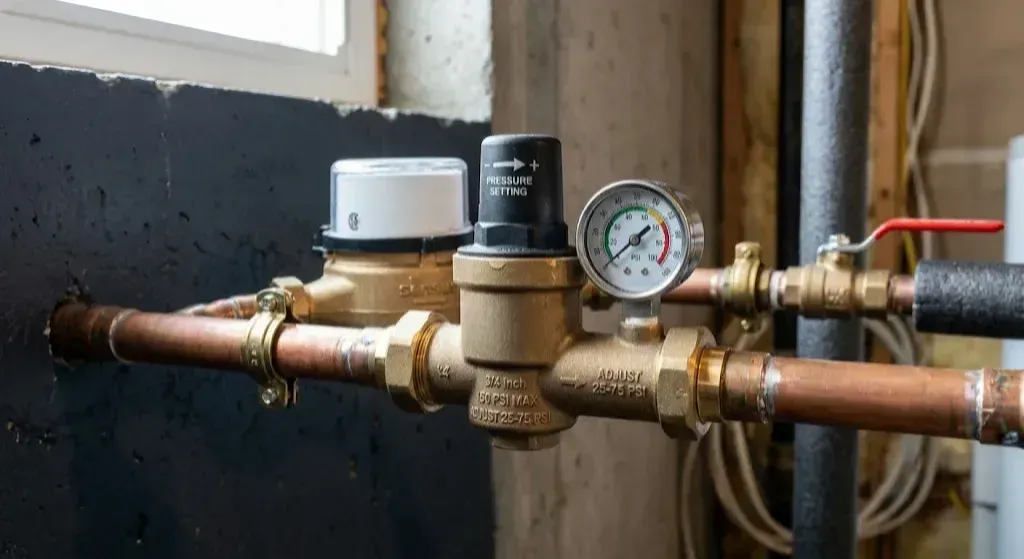
For many homes, a whole-house pressure-limiting valve installed near the water meter provides effective protection. Properties with separate plumbing zones, multiple buildings or unusual layouts may require a different configuration.
The installation location must remain accessible for testing, servicing and replacement. The valve must also be selected and installed according to the pressure requirements of the property and the equipment connected to the system.
Pressure-limiting valves do not last indefinitely. Internal components may wear, become obstructed by debris or stop maintaining the intended downstream pressure. Periodic pressure testing helps confirm that the valve continues to operate correctly.
Install Isolation Valves in Key Areas
Isolation valves allow water to be shut off to a particular fixture, appliance or section of the home without turning off the entire property supply.
When a flexi hose bursts, a toilet inlet valve fails or an appliance connection leaks, an accessible isolation valve can limit the amount of water released before repairs are completed.
Isolation valves also make routine plumbing work faster and less disruptive because the plumber can isolate one fixture without draining or shutting down the entire system.
Priority Locations for Isolation Valves
High-risk water connections should have accessible isolation points wherever practical.
Priority locations include:
- Hot and cold lines beneath kitchen sinks
- Dishwasher supply connections
- Bathroom basin connections
- Behind or beside toilet cisterns
- Laundry tubs
- Washing machine outlets
- Refrigerators with water or ice dispensers
- Outdoor taps
- Irrigation systems
- Hot water system supply lines
Two-storey homes may also benefit from zone isolation. A valve controlling the supply to the upper level can allow a concealed leak upstairs to be isolated while retaining water to essential fixtures downstairs.
Types of Isolation Valves
Ball valves are commonly used on larger branch lines because they provide a full-bore opening and operate with a simple quarter turn.
Mini stop valves are frequently installed beneath basins, behind toilets and beside appliances. Their compact size makes them suitable for cabinetry and other restricted spaces.
All isolation valves should be:
- Correctly sized for the pipework
- Compatible with the pipe and fitting materials
- Installed in an accessible position
- Easy to identify and operate
- Protected from accidental damage
- Tested periodically to prevent seizure
Valves concealed behind fixed cabinetry or installed where they cannot be reached provide limited value in an emergency.
Installation work must comply with Queensland plumbing legislation, including the Plumbing and Drainage Act 2018, the National Construction Code and applicable Australian Standards. A licensed plumber can determine where valves are necessary without creating an unnecessarily complicated layout.
Upgrade Ageing or Deteriorated Pipework
Replacing vulnerable pipework can provide more lasting protection than repeatedly repairing individual leaks. This is especially relevant when a property has widespread corrosion, brittle plastic pipes or multiple previous failures.
Pipe upgrades may involve:
- Replacing isolated damaged sections
- Repiping a particular bathroom, kitchen or laundry
- Replacing ageing hot water lines
- Upgrading corroded galvanised steel pipes
- Rerouting pipework away from vulnerable locations
- Protecting exposed pipes from heat and sunlight
- Improving support and fixing points
- Replacing incompatible fittings or materials
Signs That Pipework May Need Upgrading
Possible indicators include:
- Recurring leaks in different parts of the home
- Discoloured water
- Reduced or uneven flow
- Visible rust or green staining
- Damp patches inside walls or beneath floors
- Unexplained increases in water use
- Repeated repairs to the same pipe material
- Pipes that have exceeded their expected service life
A plumber may use pressure testing, moisture detection, thermal imaging or acoustic equipment to investigate concealed pipework. Where drainage pipes are involved, a CCTV drain inspection may be used to locate cracks, root intrusion, misaligned joints or collapsed sections.
Targeted Repairs Versus Repiping
Complete repiping is not always necessary. If deterioration is limited to one branch or section, targeted replacement may resolve the immediate risk.
More extensive replacement may be appropriate when:
- Several leaks have occurred within a short period
- The same pipe material is failing throughout the home
- Corrosion is widespread
- The plumbing layout is being altered during renovation
- Existing pipes are undersized or poorly installed
- Access will become more difficult after new finishes are installed
Planning pipe upgrades during a renovation can reduce disruption because walls, floors or cabinetry may already be open. It also prevents new finishes from being damaged later by ageing plumbing that could have been replaced beforehand.
Improve Gutters, Downpipes and Stormwater Drainage
Protecting a home from water damage requires more than maintaining internal plumbing. Roof water and stormwater must also be directed safely away from the building.
Brisbane’s intense summer rainfall can overwhelm systems that are blocked, damaged, poorly graded or unsuitable for the roof area they serve.
Roof Plumbing Improvements
Potential upgrades include:
- Repairing rusted or leaking gutters
- Correcting inadequate gutter falls
- Replacing damaged downpipes
- Improving gutter overflow provisions
- Adding suitable leaf protection where appropriate
- Clearing debris from roof valleys and sumps
- Checking downpipe connections
- Increasing capacity where the existing system is inadequate
- Repairing joints that discharge water into walls or eaves
Leaf guards may reduce debris entry but do not eliminate the need for maintenance. Gutters, downpipes and roof outlets should still be inspected and cleaned at suitable intervals.
Underground Stormwater Upgrades
Cracked or collapsed stormwater pipes can cause water to pool near foundations or reappear in unexpected areas during heavy rain.
A stormwater inspection may identify:
- Root intrusion
- Crushed or collapsed pipes
- Poorly aligned joints
- Inadequate pipe gradients
- Blocked pits
- Disconnected downpipes
- Illegal or unsuitable connections
- Discharge points that direct water towards the building
CCTV inspections and water testing can help locate underground defects without unnecessary excavation.
Surface drainage around the home should also direct water away from slabs, retaining walls and subfloor areas. Grates, pits and drains must remain clear and be positioned where runoff naturally collects.
Stormwater and roof plumbing upgrades must be designed for the property rather than applied as a general solution. Roof size, site slope, soil conditions, surrounding structures and legal discharge points all influence the appropriate system.
Consider Leak Detection and Automatic Shut-Off Devices
Leak detection devices can identify water where it should not be or detect unusual flow through the plumbing system. They are particularly useful for concealed leaks, unattended properties and high-risk areas where a small failure could cause extensive damage.
A combination of point-of-use sensors and whole-house monitoring often provides the most complete protection.
Point-of-Use Leak Sensors
Point-of-use sensors are installed in locations where water is likely to collect first.
Suitable locations include:
- Beneath kitchen sinks
- Inside bathroom vanity cabinets
- Behind dishwashers
- Near washing machines
- Beneath refrigerators with water connections
- Beside hot water systems
- Near toilets
- Under water filters
- In plant rooms or garages containing plumbing equipment
Basic sensors sound an alarm when they contact water. Smart leak models may also send notifications through Wi-Fi, Bluetooth or a home automation system.
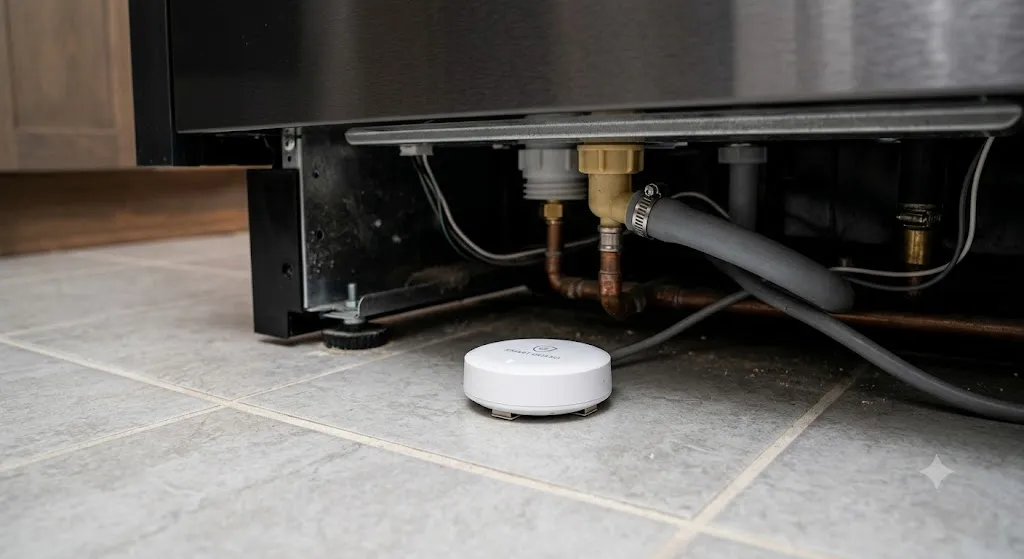
The sensor should be positioned at the lowest point where escaping water is likely to pool. Installing it too high or too far from the connection may delay detection.
Whole-House Monitoring Systems
Whole-house systems are installed on the main water line and monitor flow patterns. They may detect:
- Continuous low-level flow
- Sudden high-volume usage
- Water use during expected inactive periods
- Unusual changes from normal household patterns
Some systems can automatically close the main water supply when a suspected leak is detected. Others send an alert and allow the homeowner to shut the valve remotely through an application.
Automatic shut-off systems can be particularly valuable for:
- Investment properties
- Holiday homes
- Frequently vacant houses
- Multi-storey properties
- Homes with valuable timber flooring
- Properties with previous concealed leaks
- Older homes with vulnerable pipework
Choosing Suitable Devices
Device selection should consider:
- Humidity and temperature exposure
- Indoor or outdoor installation
- Appropriate ingress protection ratings
- Wi-Fi or mobile connectivity
- Battery life
- Low-battery alerts
- Compatibility with home automation systems
- Manual override functions
- Whether the valve can operate during a power outage
- Accessibility for servicing
Hard-wired devices may be appropriate for critical areas, but backup power may still be required. Battery-operated sensors should be included in a maintenance schedule so flat batteries do not create false confidence.
Setup and Maintenance
Flow-monitoring systems must be configured for the property. Irrigation systems, rainwater pumps, pool equipment and high-flow fixtures can affect normal usage patterns.
During commissioning, the system may need to learn how and when water is normally used. Correct calibration reduces unnecessary alarms while still identifying genuine leaks.
Homeowners should:
- Test alarms according to the manufacturer’s instructions
- Confirm that mobile notifications are working
- Replace batteries as required
- Check sensors for corrosion or movement
- Ensure shut-off valves remain operational
- Update device software where applicable
- Review settings when household water use changes
Leak detection devices complement good plumbing maintenance but do not replace it. Damaged hoses, corroded pipes and excessive pressure should still be repaired rather than relying on sensors to identify a future failure.
Backflow Prevention and Why It Matters
Backflow prevention protects drinking water from contamination. It stops non-potable water or other substances from flowing backwards into clean water pipes during pressure changes.
Although backflow prevention is primarily a water-quality and health measure rather than a leak-prevention upgrade, it remains an important part of a safe plumbing system.
How Backflow Occurs
Backflow generally occurs through back siphonage or back pressure.
Back siphonage happens when the pressure in the main supply drops below the pressure in a connected system. A main break, firefighting activity or unusually high network demand can create conditions that draw water backwards through a cross-connection.
Back pressure occurs when a private system has greater pressure than the incoming supply. Pumps, boilers, elevated tanks, irrigation systems and some hot water equipment can create this situation.
If an unprotected connection exists, contaminated water may enter the drinking water supply.
Common Backflow Prevention Methods
The required device depends on the contamination hazard and the type of connection.
Common protection methods include:
- Air gaps
- Non-return valves
- Dual-check valves
- Hose connection vacuum breakers
- Pressure vacuum breakers
- Double-check valve assemblies
- Reduced pressure zone devices
An air gap creates a physical separation between the outlet and the highest possible water level. Where a suitable air gap cannot be provided, a mechanical backflow prevention device may be required.
When Testable Devices May Be Required
Not every residential property requires a testable backflow device. The required level of protection depends on the property’s plumbing connections and the potential contamination hazard.
Additional protection may be required for properties with:
- Irrigation systems
- Rainwater tanks connected to household plumbing
- Swimming pools
- Pumps
- Chemical dosing equipment
- Home businesses involving hazardous substances
- Other medium- or high-hazard connections
Testable devices must be installed, registered and maintained in accordance with local requirements. They generally require regular testing by a plumber with the appropriate backflow endorsement.
A licensed plumber can assess the property’s hazard level and determine whether existing protection is suitable.
How Plumbing Inspections Identify Upgrade Priorities
A professional plumbing inspection provides a clearer picture of where a home is most vulnerable. Instead of selecting upgrades based on assumptions, homeowners can prioritise work according to actual condition, urgency and potential consequences.
An inspection may cover:
- Water pressure
- Flexible hose condition
- Isolation valve accessibility
- Visible pipework
- Signs of corrosion
- Hot water system connections
- Moisture around fixtures
- Water meter movement
- Roof plumbing
- Stormwater drainage
- Backflow protection
- Previous repair areas
- Concealed leak indicators
Additional diagnostic tools may be recommended when the source of a problem is not visible.
Pinpointing High-Risk Areas
Inspections can reveal pipes, hoses and fittings that are approaching failure before significant damage occurs.
For example, an inspection may identify:
- Corroded galvanised pipework
- Pitted copper pipes
- Brittle plastic pipes
- Flexi hoses with damaged braiding
- Excessive mains pressure
- Missing isolation valves
- Active leaks beneath showers
- Damaged stormwater pipes
- Poor gutter discharge
- Unprotected cross-connections
Rather than replacing everything immediately, the inspection report can identify which components present the highest risk and which can be monitored or upgraded later.
Ranking Work by Risk and Cost
Upgrade priorities should consider:
- The likelihood of failure
- The amount of damage a failure could cause
- Whether the problem affects water quality
- The condition of surrounding materials
- Repair access
- Property occupancy
- Available budget
- Future renovation plans
- Local weather and site conditions
Immediate priorities may include active leaks, deteriorated flexi hoses, excessive pressure or badly corroded supply pipes.
Secondary improvements may include adding isolation valves, installing leak sensors, upgrading stormwater drainage or replacing ageing pipe sections during a planned renovation.
A staged approach allows homeowners to address urgent risks first while preparing for larger improvements over time.
Protecting the Home Through Preventative Plumbing Upgrades
Effective leak prevention relies on a combination of suitable upgrades, routine maintenance and early intervention. Replacing deteriorated flexi hoses, controlling water pressure, installing accessible isolation valves and upgrading vulnerable pipework can significantly reduce the risk of sudden internal flooding.
Stormwater improvements help protect the building during heavy rainfall, while leak detection systems can provide early warning when a concealed or unexpected failure occurs. Backflow protection also ensures that the plumbing system continues to safeguard the quality of the household water supply.
Investing in preventative plumbing improvements is a practical way to protect a property and preserve its long-term value. By identifying vulnerable areas, prioritising suitable upgrades and completing work to the required standard, Plumbing Inspectors helps Brisbane homeowners create plumbing systems that are better prepared for everyday use, ageing infrastructure and changing weather conditions.

.webp)