

Why Is My Hot Water System Leaking?
A leaking hot water system can become more than a minor household inconvenience. Drips around the tank, moisture on the floor, unusual noises or a sudden drop in water pressure can indicate an underlying problem. If left unattended, even a small leak may contribute to water damage, mould growth, higher energy bills or complete system failure.
For property owners seeking help from Plumbing Inspectors, recognising the early warning signs can make it easier to determine when professional assistance is needed. This is important when leaks develop suddenly or continue to worsen, as emergency plumbers in Brisbane may be required to address an active leak and reduce the risk of further damage.
Knowing where a leak is coming from and recognising the signs of a serious fault can help property owners respond appropriately. Early action may prevent a minor plumbing issue from developing into costly water damage or complete system failure.
Common Causes of Hot Water System Leaks
Most hot water system leaks can be traced to a small number of faults around the tank, valves, fittings or pipework. The location of the leak can provide an early indication of the underlying problem and whether the system may need a simple repair or more extensive work.
Faulty Temperature and Pressure Relief (TPR) Valve
The TPR valve is a safety device that releases water when the temperature or pressure inside the cylinder becomes too high. Occasional discharge during heating can be normal, but constant dripping may indicate mineral build-up, excessive water pressure or a faulty thermostat.
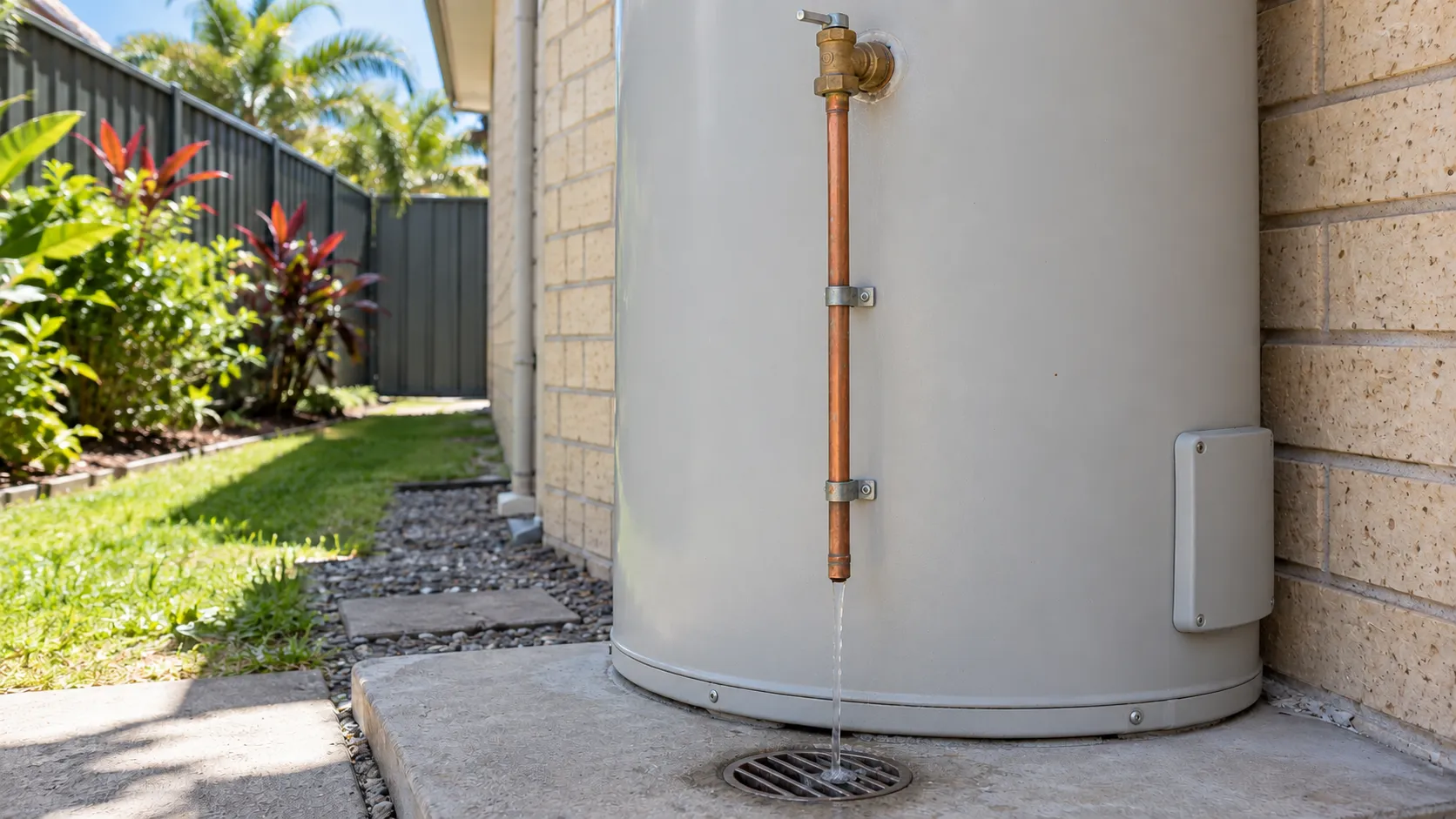
A steady flow from the discharge pipe should be treated as a warning sign if the water is very hot. The valve should never be blocked or capped, as this can prevent it from performing its safety function. A faulty TPR valve or suspected pressure issue should be assessed by a licensed plumber.
Corrosion and Tank Deterioration
Corrosion is a common cause of leaks in older storage hot water systems. As the protective anode deteriorates, the internal steel cylinder can become more vulnerable to corrosion and eventually develop leaks.
Signs of tank deterioration may include rust stains, discoloured hot water, dampness around the base or water seeping from the body of the cylinder. If the tank itself has started leaking, replacement is more appropriate than attempting to repair the damaged cylinder.
Loose Fittings, Valves and Pipework
Leaks can also develop around connections rather than from the tank itself. Flexible hoses, isolation valves, unions and other fittings can loosen due to vibration and repeated heating and cooling.
Minor leaks may sometimes be caused by a worn washer, gasket or flexi hose. However, corroded fittings, damaged connections or signs of previous repairs may require component replacement to prevent the leak from returning.
Leaking Internal Components
Some hot water systems can develop leaks around internal components, including heating element covers, gaskets and expansion control valves. On electric systems, moisture around the element or other electrical components is concerning because water can create an electrical safety hazard.
Any leak near electrical components should be addressed promptly rather than left to worsen. A professional inspection can help identify the source of the leak and determine whether the affected component can be repaired or needs replacement.
How to Identify Where the Leak Is Coming From
Finding the actual source of a hot water leak can be difficult because water may travel along pipes, insulation or the surface of the tank before reaching the floor. The visible puddle or drip is not always where the problem begins. A simple visual check can help narrow down the likely source without interfering with the system.
1. Check the Base of the Tank
Start by looking around the bottom of the storage tank for pooled water, dampness or rust staining. Water coming directly from the base or body of the cylinder can indicate internal corrosion and may mean the tank needs to be replaced.
If the area around the base is wet, check whether water is coming from a pipe or fitting above rather than from the cylinder itself. Visible water trails can help indicate where the leak starts.
2. Inspect Visible Pipes and Connections
Check the visible pipework, valves, unions and flexible connections around the hot water system. Signs of leaking may include water droplets, staining, corrosion or mineral deposits around a connection.
The temperature and pressure relief (TPR) valve should also be considered. Occasional discharge during heating can be normal, but continuous dripping or a steady flow may indicate a faulty valve or pressure-related issue that requires professional assessment.
3. Check the Surrounding Area
Water damage may extend beyond the hot water system itself. Damp walls, ceilings, flooring or nearby surfaces can indicate that water has travelled from a concealed pipe or connection.
Outdoor systems should also be checked for obvious signs of water entering from surrounding areas after heavy rain. If the tank and visible connections appear dry but moisture continues to collect nearby, the leak may be coming from another part of the plumbing system.
4. Avoid Interfering With the System
If the source cannot be clearly identified, the system should not be dismantled or safety components adjusted. Hot water systems can involve high temperatures, pressure, electricity or gas, making some leaks unsafe to investigate without professional equipment and experience.
A licensed plumber can trace the source of the leak, determine whether it is coming from the tank, a valve, a connection or nearby pipework and recommend the appropriate repair.
What Are the Warning Signs of a Serious Hot Water Leak?
Some hot water leaks are minor, but certain signs can indicate a more serious fault or an immediate safety concern. The amount of water, location of the leak, condition of the tank and changes in system performance can all help indicate how urgently the problem needs to be addressed.
Continuous or Rapid Water Flow
An occasional drip from the temperature and pressure relief (TPR) valve during a heating cycle can be normal. However, a continuous trickle, strong flow or rapidly worsening leak may indicate excessive pressure, a faulty valve or another system fault.
Water coming directly from the base or body of the cylinder is concerning, as it can indicate internal corrosion or tank failure. A damaged cylinder will often require replacement rather than a simple repair.
Significant Corrosion or Tank Damage
Heavy rust, discoloured hot water, damp seams or moisture around the base of the tank can indicate advanced corrosion. If the cylinder itself has deteriorated, the risk of a larger leak and water damage can increase.
Visible damage to the tank should be assessed by a licensed plumber rather than left to worsen.
Water Near Electrical or Gas Components
Water near electrical components can create an electric shock or fire hazard and should be treated as an urgent safety issue. The system should not be operated until it has been professionally assessed.
Gas hot water systems also require prompt attention if there is a gas smell or unusual hissing around a gas connection. The area should be kept clear and the system assessed by a licensed professional before use.
Sudden Changes in System Performance
A leak combined with unusually hot or cold water, longer heating times, rumbling noises or a sudden reduction in hot water can indicate an underlying problem with the thermostat, pressure, heating components or tank.
Homeowners can also review what to check when there is no hot water to identify basic supply or performance issues without opening or adjusting the system.
When a leak is rapidly worsening or accompanied by a safety concern, prompt professional assistance is recommended.
Can a Hot Water System Leak Cause Property Damage?
Yes, a leaking hot water system can cause property damage if it is not addressed promptly. Water from a faulty valve, damaged pipe connection or leaking cylinder can spread into flooring, walls, cabinetry and other nearby materials. Even a slow leak can lead to swelling, deterioration, mould growth and unpleasant odours when moisture remains trapped for an extended period.
The extent of the damage depends on the location and volume of the leak, how long it continues and which materials are affected. Water pooling near electrical components can also create additional safety risks. Promptly addressing the source and having the system assessed can help contain the leak, limit property damage and determine whether the issue can be repaired or requires replacement.
What Should You Do if Your Hot Water System Is Leaking?
A leaking hot water system should be dealt with promptly, particularly when water is pooling, the leak is worsening or water is close to electrical components. Taking a few basic steps can help reduce the risk of injury and limit property damage while waiting for professional assistance.
1. Make the Area Safe
Keep people away from the affected area if there is standing water or a risk of contact with electrical components. If it is safe to do so, isolate the hot water system's power or gas supply and turn off the water supply to the unit using the isolation valve.
Do not touch electrical components, gas controls or damaged parts of the system. If there is a burning smell, electrical arcing, a strong gas smell or significant water flow, professional assistance should be arranged urgently.
2. Limit Further Water Damage
Move furniture, stored belongings and other valuables away from the leaking area where it is safe to do so. Towels or containers can be used to catch minor drips, but standing water should not be approached if it may have reached electrical fittings.
Avoid attempting temporary repairs with tape, sealants or other materials. These may conceal the source of the leak or interfere with safety components without addressing the underlying fault.
3. Arrange a Professional Inspection
Once the system has been made as safe as possible, a plumber can identify the source of the leak and determine whether the problem involves a valve, fitting, pipe, internal component or the tank itself.
A leaking cylinder may require replacement, while a faulty valve or connection may be repairable. Prompt professional assessment can help prevent a minor leak from developing into water damage or a more serious system failure.
Can a Leaking Hot Water System Be Repaired, or Does It Need Replacement?
Whether a leaking hot water system can be repaired depends largely on where the leak is coming from and the overall condition of the unit. Leaks caused by a faulty valve, loose fitting, damaged connection or other replaceable component can often be repaired without replacing the entire system.
Professional hot water system repairs and replacement can address leaking valves, damaged fittings, faulty components and deteriorated systems based on the source and severity of the problem.
A leak from the tank or cylinder itself is more serious. Corrosion, water seeping from the body or seams, or persistent pooling beneath the unit can indicate internal tank failure. In these situations, replacement is usually more practical than attempting to repair the cylinder if the system is already older or has experienced repeated faults.
Replacement may also be worth considering when the system's performance has deteriorated or repairs are becoming frequent. Inconsistent water temperature, slow heating, inadequate hot water supply and repeated component failures can indicate that the unit is approaching the end of its serviceable life.
When Should You Call an Emergency Plumber for a Leak?
.webp)
Not every hot water leak requires an emergency callout, but some situations need immediate professional attention. Rapidly increasing water flow, continuous discharge from a temperature and pressure relief (TPR) valve, water near electrical components or signs of a gas problem can indicate a serious fault. Acting quickly can help reduce safety risks and limit property damage.
The Leak Is Rapidly Getting Worse
A small drip from a fitting is different from water flowing continuously from the system or spreading across floors and walls. A worsening leak may indicate a failed valve, damaged connection or leaking cylinder and can cause water damage if left unattended.
If it is safe to do so, the water supply to the hot water system can be isolated while waiting for professional assistance.
Water Is Near Electrical Components
Water around electrical connections, wiring or other electrical components should be treated as an urgent safety concern. Burning smells, scorch marks or electrical arcing require immediate attention.
The area should be kept clear and the system isolated from the power supply only if this can be done safely. A licensed professional should inspect the system before it is used again.
The TPR Valve Is Discharging Continuously
Occasional discharge from the TPR valve during a heating cycle can be normal, but continuous flow may indicate excessive pressure, overheating or a faulty valve. A strong or persistent discharge should not be ignored or blocked.
The system should be professionally assessed to identify the cause and determine whether the valve or another component needs attention.
There Are Signs of a Gas Problem
A gas hot water system requires urgent attention if there is a smell of gas, hissing around a gas connection or another indication of a gas leak. If it is safe to do so, the gas supply should be isolated and the area kept clear until a licensed professional can assess the system.
For households dealing with a worsening hot water leak, water near electrical components or another immediate plumbing emergency, plumbers can provide prompt assessment and help prevent further damage.
How Can Regular Maintenance Help Prevent Leaks?
Regular maintenance can help identify worn components, corrosion and pressure issues before they develop into leaks. Checking the system at appropriate intervals can also help maintain safe operating conditions and extend the service life of the hot water unit.
Following a practical plumbing maintenance checklist can help homeowners monitor hot water systems, visible pipework, valves and other common sources of leaks.
Check Pressure and Temperature Controls
Excessive pressure and temperature can place additional stress on the tank, valves and pipework. During professional servicing, the temperature and pressure relief (TPR) valve, thermostat and relevant pressure controls can be checked to ensure they are operating correctly.
A TPR valve that continually discharges or a thermostat that allows the water to become excessively hot may indicate an underlying fault that should be addressed before it causes further damage.
Monitor Corrosion and Sediment
Sediment and corrosion can weaken storage hot water systems and contribute to leaks. Depending on the system, maintenance may include checking the condition of the tank, inspecting the sacrificial anode and addressing sediment build-up.
Early signs such as rust staining, discoloured water or corrosion around the tank and fittings should be assessed before the damage becomes more extensive.
Inspect Valves, Fittings and Pipework
External connections can deteriorate even when the tank itself remains in good condition. Regular checks can identify moisture around isolation valves, flexible hoses, unions and pipe connections before a small leak becomes more serious.
Addressing worn or damaged components early can help reduce the risk of water damage and avoid more expensive repairs. Professional servicing can also identify developing faults that may not be obvious during routine visual checks.
A leaking hot water system can have several underlying causes, from faulty temperature and pressure relief valves and corroded storage cylinders to damaged fittings, worn anodes, pressure issues and installation problems. Identifying the source of the leak rather than treating the visible water alone can help determine whether the system requires a repair, replacement or further inspection.
Early action can help reduce the risk of water damage, mould growth, scalding hazards and more serious system failure. Plumbing Inspectors can assess a leaking hot water system, identify potential faults and determine the most appropriate solution. A leak should not be treated as a minor nuisance, as it may indicate that the system is no longer operating as intended and requires professional attention.
.webp)