Why Does My Toilet Keep Running After I Flush?
A toilet usually makes some noise after flushing, but the sound should eventually stop. If you keep hearing a hiss, notice water trickling into the bowl or hear the cistern refill when nobody has used it, you may be losing water through an internal fault. A dry bathroom floor does not necessarily mean everything is working properly.
For Brisbane homeowners, knowing the difference between normal refilling and a constantly running toilet prevents unnecessary water waste and identifies problems before they become more serious. Plumbing Inspectors analyses the cause and recommends an appropriate repair. Understanding what to look and listen for will help you explain the problem when arranging a plumbing appointment.
How Do I Know Whether My Toilet Is Still Refilling?
Normal refilling has a clear endpoint. After flushing, the cistern replenishes its water supply and the incoming water eventually shuts off. The sound and duration vary between toilets, so a fixed number of seconds is not a reliable test.
What matters is if the toilet returns to a quiet resting state. Homeowners can observe several external signs without removing the cistern lid, opening an access panel or touching internal components.
Normal Refill Sounds Versus Water That Never Stops
During an ordinary flush, water leaves the cistern and enters the bowl. You may then hear a hiss or gentle rushing sound as fresh water replaces it. Some toilets are louder than others, depending on their design and water supply.
Listen for whether the incoming-water sound eventually stops. A sound that continues well beyond the toilet's usual pattern deserves attention, particularly if you also notice persistent movement or a thin stream of water entering the bowl.
The bowl can remain at an apparently normal level while water passes through it. This means the absence of rising water does not rule out a running cistern. Similarly, a brief change in sound during refilling does not automatically indicate a fault.
If you hear your toilet constantly running, note whether the sound is uninterrupted or stops and starts again. Check if the water movement in the bowl continues after the flush has settled. These observations can help a plumber understand the symptoms, although they cannot identify the faulty component by themselves.
Intermittent Refilling When Nobody Has Flushed
A toilet that becomes quiet before starting to refill again presents a different pattern. You might notice this while the house is quiet or hear an occasional burst of water from an unused bathroom.
This often happens when water leaves the cistern and the inlet mechanism responds by topping it up. Because the refill eventually stops, the toilet can appear to be working normally whenever someone walks past.
Useful observations include whether the toilet was recently used, whether water remains visible in the bowl between refills and whether moisture is appearing outside the toilet. These details can help a plumber narrow down the possible causes.
Identify an incoming-water sound from a weak or incomplete flush. A toilet cistern that does not fill properly may have a different supply or inlet problem. Similar noises can accompany different faults, so the overall pattern matters more than the sound alone.
Two Different Faults Can Produce Similar Sounds
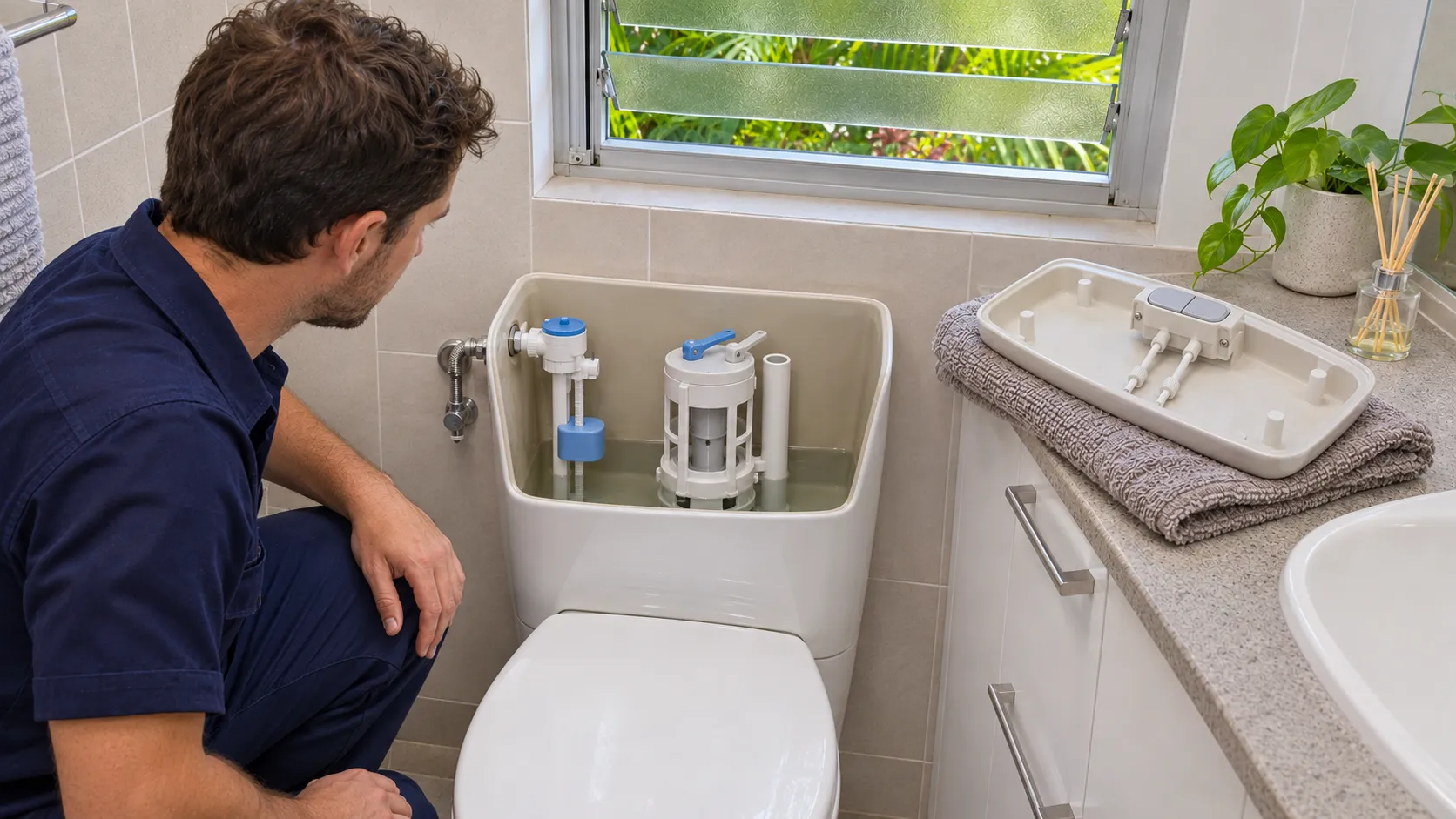
A toilet cistern has two main functions: holding water ready for the next flush and admitting fresh water afterwards. Problems with either function can leave water moving long after the toilet should have returned to its normal resting state.
The flush valve controls water leaving the cistern, while the fill valve controls water entering it. These components work together, which is why an ongoing refill sound does not automatically mean the fill valve is faulty.
Water Escaping Past the Flush Valve
The flush valve opens when the toilet is flushed, allowing stored water to enter the bowl. Once the flush finishes, it should close properly and retain the next supply of water in the cistern.
If the valve does not seal completely, water can continue escaping into the bowl. Possible causes include a worn sealing surface, debris interfering with the seal or a mechanism that is not returning to its proper resting position.
A flush valve leak may be obvious as a persistent trickle, but a smaller leak can be difficult to notice. As the stored water level gradually falls, the fill valve opens to replace what has escaped. The resulting refill noise is therefore a response to water loss elsewhere in the cistern.
This distinction matters when arranging a repair. Replacing the component making the noise would not necessarily stop the water loss if the flush valve continues to allow water through. A licensed plumber needs to establish where the water is escaping and whether the cistern can retain its supply.
A Fill Valve That Does Not Shut Off Properly
The fill valve admits fresh water after flushing and should stop the supply once the cistern reaches its intended level. If it does not shut off correctly, incoming water may continue flowing even after the cistern has replenished.
In many toilet designs, excess water can travel through an internal overflow path into the bowl. You may notice water movement that resembles a leaking flush valve, even though the original fault is on the incoming-water side.
Wear, contamination or an issue with the level-control mechanism can affect how the fill valve operates. The plumber also needs to consider whether the flush control is preventing another component from closing properly.
More than one fault can be present when symptoms have continued for some time. Professional inspection and testing are necessary to establish which components need attention rather than replacing parts based on the sound alone.
Why Does My Toilet Refill Even When I Haven't Used It?
An occasional refill without a flush often means the cistern is replacing water it has lost. The water may be escaping internally into the toilet bowl rather than onto the bathroom floor.
This pattern is easy to overlook because the toilet may still flush normally. However, a toilet can remain usable while continuously losing water, so normal flushing performance does not prove that the cistern is working correctly.
Slow Water Loss From the Cistern Into the Bowl
When water escapes slowly past an internal seal, the change in the cistern level may be gradual. Eventually, the inlet mechanism responds and allows more water in. Once the level is restored, the refill stops until enough water has escaped to trigger another cycle.
You may hear this more clearly overnight, but that does not mean the fault only occurs at night. Lower background noise simply makes the refill easier to notice. Similarly, a rarely used toilet can develop an internal leak even when nobody has flushed it recently.
The bowl may show a slight ripple or a narrow trail of water. However, the absence of an obvious trickle does not rule out a small leak. Reflections, bowl shape and the rate of flow can make subtle water movement difficult to recognise.
Water on the floor is a separate concern. An internal cistern leak does not explain every wet patch around a toilet. If moisture appears outside it, a plumber needs to investigate the source rather than assume it is part of the same problem.
Why an Apparently Small Fault Can Run All Day
A small internal leak can continue between every use of the toilet. Unlike water used during a flush, this flow serves no practical purpose. The automatic refill mechanism keeps replacing the lost water, allowing the cycle to continue while the property is occupied or empty.
The amount lost depends on the fault and how long it continues. Sound alone cannot provide a reliable water-loss figure, and an occasional refill should not be converted into a confident estimate without measurement.
An unexplained increase in household water use can support the need for investigation, although it does not prove the toilet is the only source. Tell the plumber about the refill pattern and any broader changes you have noticed.
The Queensland Government provides guidance on checking your water meter for possible leaks. A change in the reading while no water is being used may indicate a leak, although further investigation is needed to establish its source.
Repairing unintended water loss is also different from replacing a toilet for efficiency reasons. An existing toilet may simply need a suitable repair to operate correctly again. For broader household improvements, these ways to improve water efficiency in your home explain how plumbing attention reduces avoidable water use.
When Should I Arrange Urgent Help?
Urgency depends on where the water is going and if the situation is stable. A quiet internal trickle with no external leakage calls for a prompt repair appointment rather than the same response as water spreading across the bathroom.
Continuous water flow should be assessed promptly, even when there is no visible leak on the floor. If water is escaping outside the toilet, spreading across the bathroom or threatening nearby fixtures, contact a licensed plumber for urgent assistance.
Water Escaping Outside the Toilet
Water appearing around the cistern, pan, connections or adjoining floor needs attention beyond the usual running-water noise. From observation alone, it may be difficult to tell whether the source is the cistern, a supply connection or another part of the toilet.
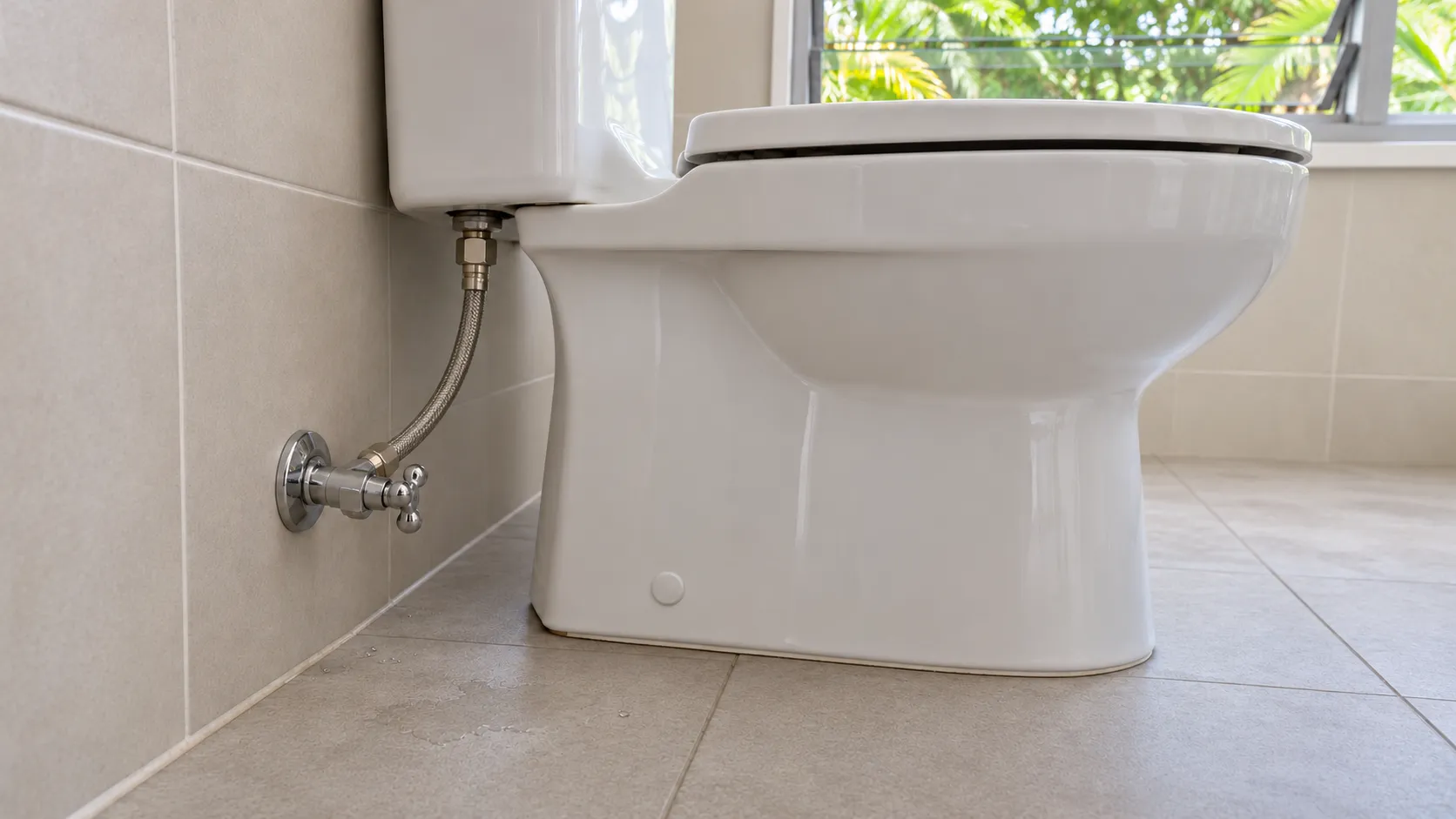
Stop using the affected toilet and keep people away from the wet area. Avoid flushing to see if the leak repeats, as additional water can make the situation harder to contain.
Tell the plumber whether the water appears only during flushing, continues between flushes or is spreading into nearby areas. These details are more useful than describing every leak as an overflowing toilet.
If you notice water near electrical fittings or equipment, keep clear and report the hazard without touching the equipment.
A running cistern and a bowl that is rising towards its rim are also different problems. The latter may involve a drainage issue rather than simply an internal valve fault. You do not need to diagnose the difference before calling, but you should clearly describe where the water level is rising.
Continuous Flow That Cannot Be Safely Contained
Continuous internal flow deserves prompt attention, even when the bathroom floor remains dry. It becomes more urgent if water is escaping, the situation is worsening or the toilet cannot be left without concern about further damage.
Do not assume that avoiding another flush will stop water already entering through a faulty inlet. If the flow cannot be safely contained, contact a plumber and explain what is happening.
If you are looking for emergency plumbers in Brisbane, explain whether the flow is continuous, where the water is visible and whether the affected toilet is your property's only available toilet. Ask about attendance availability and what information the plumber needs before arriving, rather than assuming every running cistern requires the same response.
This overview of plumbing emergencies homeowners should be prepared for provides further context for recognising situations that need prompt professional attention.
A Repair Should Address the Cause of the Running Water
A successful repair needs to do more than silence the toilet temporarily. The cistern should refill correctly, stop admitting water at the intended level and retain its stored water between uses.
Diagnosis should connect your observations with the actual fault. This may involve assessing the inlet, flush mechanism, seals and controls rather than assuming the most audible component needs replacing.
Matching Replacement Parts to the Toilet
Toilet cistern components are not all interchangeable. The plumber needs to identify the toilet's arrangement and select parts suited to its mechanism, dimensions and operating requirements. A component that appears similar may not seal, fit or operate correctly in a different cistern.
Depending on the findings, the repair may involve a suitable seal, a valve assembly or another component affecting closure and refill. The proper scope depends on what is worn or damaged and if compatible replacement parts are available.
A running toilet does not automatically require replacement of the entire toilet. In many cases, repairing or replacing the affected internal components is sufficient to restore normal operation.
For a concealed cistern, access is also part of the assessment. Some designs provide servicing access through the flush-control opening, while others have a different arrangement. The plumber needs to establish the intended access route before explaining what work is practical.
When arranging the visit, mention whether the cistern is exposed or concealed and provide any identifying information already available. An ordinary external photo may help communicate the layout, but it does not replace an inspection or justify a definite diagnosis before attendance.
Confirming the Refill Stops and the Cistern Holds Water
After completing the repair, the plumber should check the toilet through normal operation. This includes confirming that the flush control returns properly, the cistern replenishes its water supply and the incoming flow stops at the intended level.
Water retention matters just as much as refilling. If water continues escaping slowly into the bowl, the toilet may become quiet initially but begin topping up again later. Allowing time to observe the cistern after refilling helps distinguish a lasting repair from a symptom that has temporarily disappeared.
The assessment should also account for any external leakage previously reported. Stopping an internal trickle would not, by itself, explain or resolve water appearing at a separate connection or around the pan. Each reported symptom needs an explanation consistent with the plumber's findings.
Before the job is finished, ask what caused the running water, which components were repaired and what normal operation should sound like. If the original problem was intermittent, explain how often you previously noticed it. This gives the plumber useful context for checking the result and explaining what to report if the symptom returns.
Homeowners also have consumer guarantees for plumbing services, including the expectation that work is carried out with due care and skill. If the same problem returns after the repair, contact the plumbing business to explain the symptoms and discuss the next steps.
A constantly running toilet should not be ignored simply because the bathroom floor remains dry. Internal water loss can continue unnoticed, wasting water between flushes and indicating a problem that needs attention. Plumbing Inspectors can help homeowners identify the cause, assess the affected components and arrange a suitable repair to restore the toilet's normal operation.