Choosing a Bath That Your Hot Water System Can Fill
A deep bath can look perfect in a showroom and still be a poor match for your home's hot water supply. If the water starts cooling before you reach a comfortable bathing depth, the issue may not be a faulty system. The bath could simply demand more hot water than your household can spare at that time. For Brisbane homeowners, Plumbing Inspectors can assess whether the existing plumbing and hot water system are suitable before installing a new fixture.
Before committing to a design, consider four things: how much water the bath requires, how much heated water the system can deliver, how quickly it recovers and how long the bath takes to fill. These factors work together to determine whether a deep bath will be practical for everyday use. Understanding them makes it easier to compare models and discuss the right setup with a licensed plumber.
Bath Size Changes the Demand on Your Hot Water Supply
The bath’s external dimensions determine whether it fits the bathroom, but they do not reveal how much water it needs. Its internal shape, preferred bathing depth and the space occupied by the person using it influence the total volume.
When comparing models, look beyond the longest or deepest option. Consider how much water each bath needs to provide a comfortable bathing position, as this is a more useful measure of its actual demand.
Usable Bathing Volume Versus Advertised Capacity
A manufacturer's quoted capacity might describe the volume up to the overflow or another specified water level. This is not necessarily the amount used during an ordinary bath. Checking how the supplier measures capacity is important when comparing different models.
The person using the bath also displaces water, meaning less is needed to reach the same level than when the bath is empty. This difference varies depending on the occupant's size and bathing position. If two people regularly share the bath, the intended use must be considered when estimating the required volume.
The total bathing volume is not the same as the amount drawn from the hot water storage tank. Water at a comfortable bathing temperature contains a mixture of heated and cold water. Consequently, a bath requiring 180 litres of mixed water does not automatically need 180 litres of stored hot water.
The heated-water contribution depends on the temperature of the stored water, incoming cold water and the required bathing temperature. These conditions determine how much hot water is needed to produce the final mixture. This distinction is important when discussing hot water capacity with a plumber.
Why Depth Matters As Much As Length
A short, deep bath can require more water than a longer model with a shallower bathing position. Internal width also matters. A broad, relatively flat base may need considerably more water to provide adequate coverage than a narrower, contoured interior.
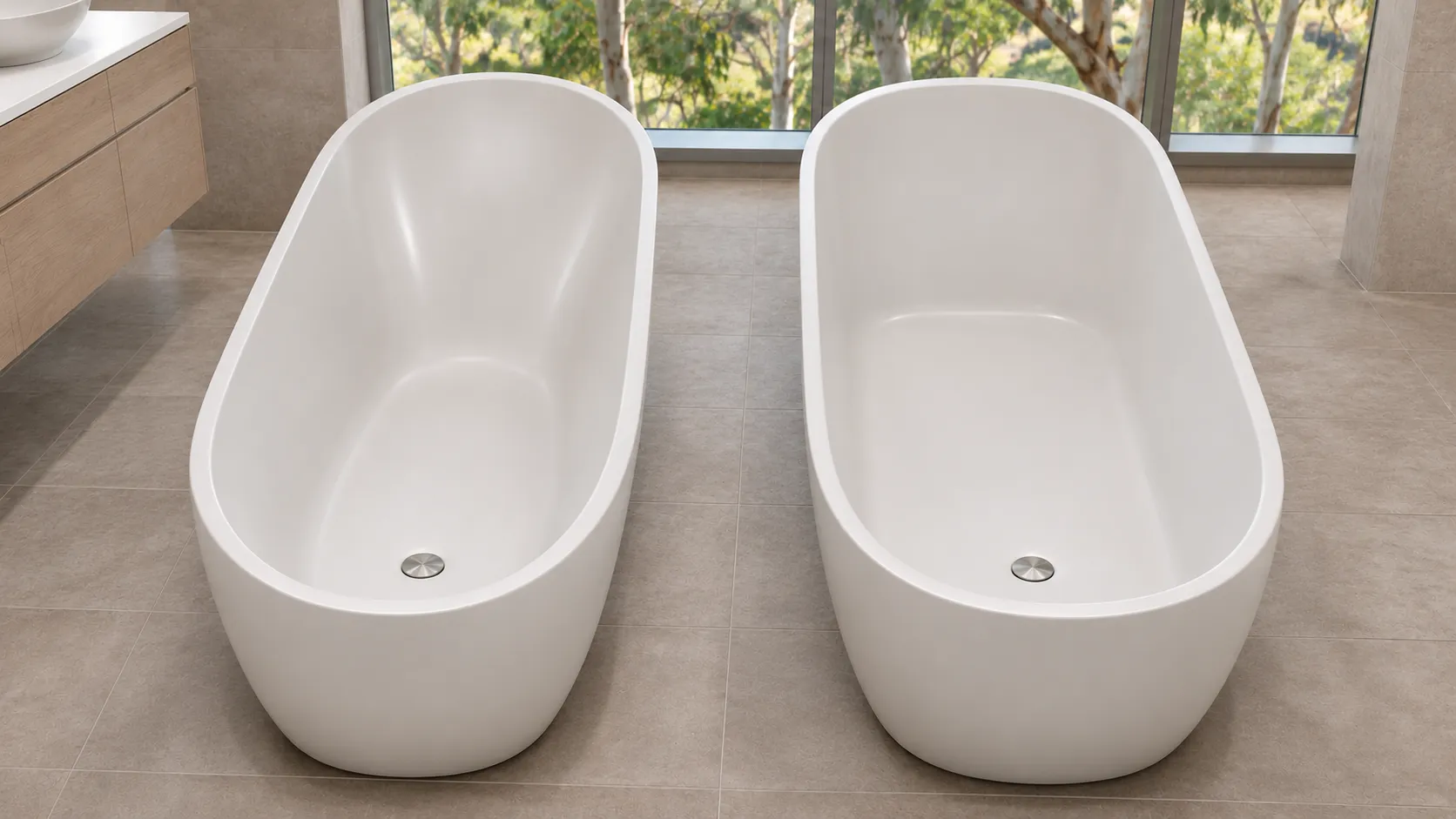
Consider where the shoulders, knees and torso will sit rather than judging depth from the outside. A high-sided design might provide the immersion desired, but reaching that level could create substantial hot water demand.
Ask suppliers for internal dimensions, capacity information and the water level associated with the quoted capacity. Where possible, check the bathing position in a display model. A sloping backrest or shaped interior may provide better support with less water, although the actual saving depends on the design.
Keep these specifications when comparing shortlisted baths. They give a plumber a more useful starting point than descriptions such as 'large freestanding bath' or 'extra-deep tub', which can represent very different water requirements.
Will My Current System Fill the Bath Comfortably?
An existing hot water system may suit a larger bath, but its tank size or product description cannot confirm this on its own. What matters is how much heated water it can deliver at the bath under the conditions present in the home.
A plumber should assess the proposed bath specifications alongside the existing system's type, condition and performance. Storage and continuous flow systems require different considerations because they supply heated water in different ways.
The Australian Government’s Energy Rating guide explains how different types of hot water systems heat and supply water, providing useful background before discussing your existing setup with a plumber.
Stored Hot Water and the Mixed Water Delivered at the Tap
A storage system holds heated water that is mixed with cold water before or at the outlet, depending on the plumbing arrangement. This allows the volume of comfortable bathing water to exceed the tank's nominal storage capacity.
However, the amount available is not a fixed multiple of the tank size. Incoming cold water temperature, stored water conditions and the required delivery temperature all affect the final mixture. Previous hot water use also matters. A tank that can comfortably supply a bath at the beginning of the evening may not provide the same volume after several showers.
Although a storage tank has a stated capacity, the water’s temperature delivered can change as hot water is used. This depends on the system's design, operating condition and how it manages incoming cold water. Temperature-control equipment can also influence the water reaching the bath.
If the system already struggles during ordinary household use, that deserves attention before a larger bath is installed. Its age and condition can inform whether it should be retained or replaced, although age alone does not determine performance.
The article on how long a hot water system lasts explains the factors worth considering when assessing an existing system.
Continuous Flow Capacity and Incoming Water Temperature
A continuous flow system heats water as it passes through the unit rather than relying on a large stored supply. This removes the storage limitation, but it does not mean unlimited heated water is available at every flow rate.
Its output depends on how much the system needs to raise the incoming water temperature. Colder incoming water requires more heating to achieve the same delivery temperature, reducing the available flow.
Seasonal changes can influence this performance. Although the household's preferred bathing temperature may remain relatively consistent throughout the year, incoming water conditions can vary.
A larger bath might fill satisfactorily but take longer than expected. Simultaneous demand from another hot water outlet can further affect performance, depending on the system's capacity and plumbing arrangement.
Provide the plumber with the bath's capacity information, proposed outlet details and existing system model if available. Ask whether the assessment considers the total mixed-water volume and the sustained delivery rate. These are separate performance questions, and a satisfactory result in one does not automatically guarantee the other.
How Much Hot Water Will the Rest of My Household Need?
A bath that fills comfortably in a quiet house may be less practical during the evening rush. The household's normal routine matters because showers, baths and other hot water uses can place competing demands on the same supply.
The most useful assessment reflects an ordinary busy day rather than an ideal situation in which nobody else needs hot water. Consider what happens immediately before the bath, while it fills and after it is finished.
The Australian Government’s YourHome guide explains why household hot water requirements should be assessed using both the number of occupants and their usual hot water routines.
Showers Before and After the Bath
Consider a household where someone showers after work, a child has a bath and another person showers later in the evening. Even if the storage tank starts the evening fully heated, there may be limited time to recover between these activities.
Alternatively, the deep bath might be the first major hot water use of the evening. It could fill comfortably but leave insufficient heated water for the next person's shower. Assessing only whether the bath reaches the required level would overlook this inconvenience.
The plumber does not need an exact calculation of every litre used. However, information about the number of household occupants, typical shower lengths and overlapping hot water activities establishes the likely demand. Other outlets connected to the same supply should also be mentioned.
For continuous flow systems, simultaneous use is relevant because it affects the delivery rate available at each outlet. For storage systems, simultaneous demand and the total amount drawn throughout the evening can matter.
It may also help to identify whether existing fixtures use more water than necessary. Options discussed in how plumbers can improve water efficiency in your home may reduce competing demand, although potential savings depend on the fixtures and household habits.
Recovery Time Between Periods of Heavy Use
Recovery describes how quickly a storage system heats replacement water after hot water has been drawn. It is not necessarily the same as the time required to reheat a completely depleted tank.
Recovery depends on the heating technology, heating input, incoming water temperature and system controls. Electricity supply arrangements and programmed heating periods may also influence when the water is reheated.
A short gap between showers and a deep bath might allow useful recovery in one home but very little in another. Some systems contribute heated water while a draw is taking place, but this should be assessed rather than assumed to keep pace with a bath outlet.
Tell the plumber whether the household needs flexibility or can comfortably separate high-demand activities. A bath used occasionally on weekends may have different requirements from one intended for nightly use.
Filling Speed Is a Separate Question From Capacity
Having enough heated water does not guarantee a quick bath fill. A bath might eventually reach the preferred level and temperature but take considerably longer than expected.
Capacity concerns the total volume available, while filling speed relates to how much water can reach the bath at a suitable temperature. Both influence everyday comfort, particularly when the bath is used during a busy evening.
Bath Outlet Flow and Supply Limitations
The bath outlet is only one part of the supply arrangement. Available flow can also be affected by the hot water system, pipework, valves, temperature-control equipment and simultaneous household use.
A large-looking spout does not establish how much water the entire system can deliver. Similarly, a manufacturer's published flow figure may be based on test conditions that differ from those in the home.
Changing to a higher-flow bath outlet cannot automatically overcome a limitation elsewhere. A continuous flow heater may be unable to heat water at the required rate, or the plumbing arrangement may restrict delivery. A licensed plumber needs to assess how these components work together before recommending different tapware.
For example, filling a bath with 180 litres of mixed water at a sustained flow of 12 litres per minute takes approximately 15 minutes. Increasing the flow to 18 litres per minute reduces the filling time to around 10 minutes.
These figures demonstrate the relationship between flow and filling time. They are not predictions for a bathroom or recommendations for outlet selection.
The important consideration is the flow available at the required bathing temperature. A strong cold-water flow does not establish equivalent heated-water performance. Ask for an assessment based on the proposed bath outlet and hot water system together, especially if a shorter filling time is important.
Heat Loss During a Slow Fill
Water begins losing heat as soon as it enters the bath. The amount of heat lost depends on several factors, including the bath material, starting water temperature, room conditions and time taken to fill it.
Bath materials can influence how quickly heat moves through the structure. Acrylic baths have relatively low thermal conductivity, while steel baths can transfer heat more readily. Solid-surface baths also have different thermal characteristics depending on their composition and thickness. Construction and insulation can affect heat retention, so material alone does not determine which bath will keep water warmer for longer.
A slow fill can leave the earliest water cooler by the time the bath reaches the preferred depth. This does not automatically mean a larger hot water system is needed. Instead, it highlights why filling time and temperature should be considered together.
When comparing models, ask about usable volume, construction and material characteristics. A bath that requires less water may reach a comfortable depth sooner, but its shape and bathing position must still suit the intended occupant.
Match the Bath and Water Supply Before Committing
The best time to resolve a potential mismatch is before ordering the bath. This allows homeowners to compare lower-volume designs with the cost and practical implications of changing the existing hot water supply.
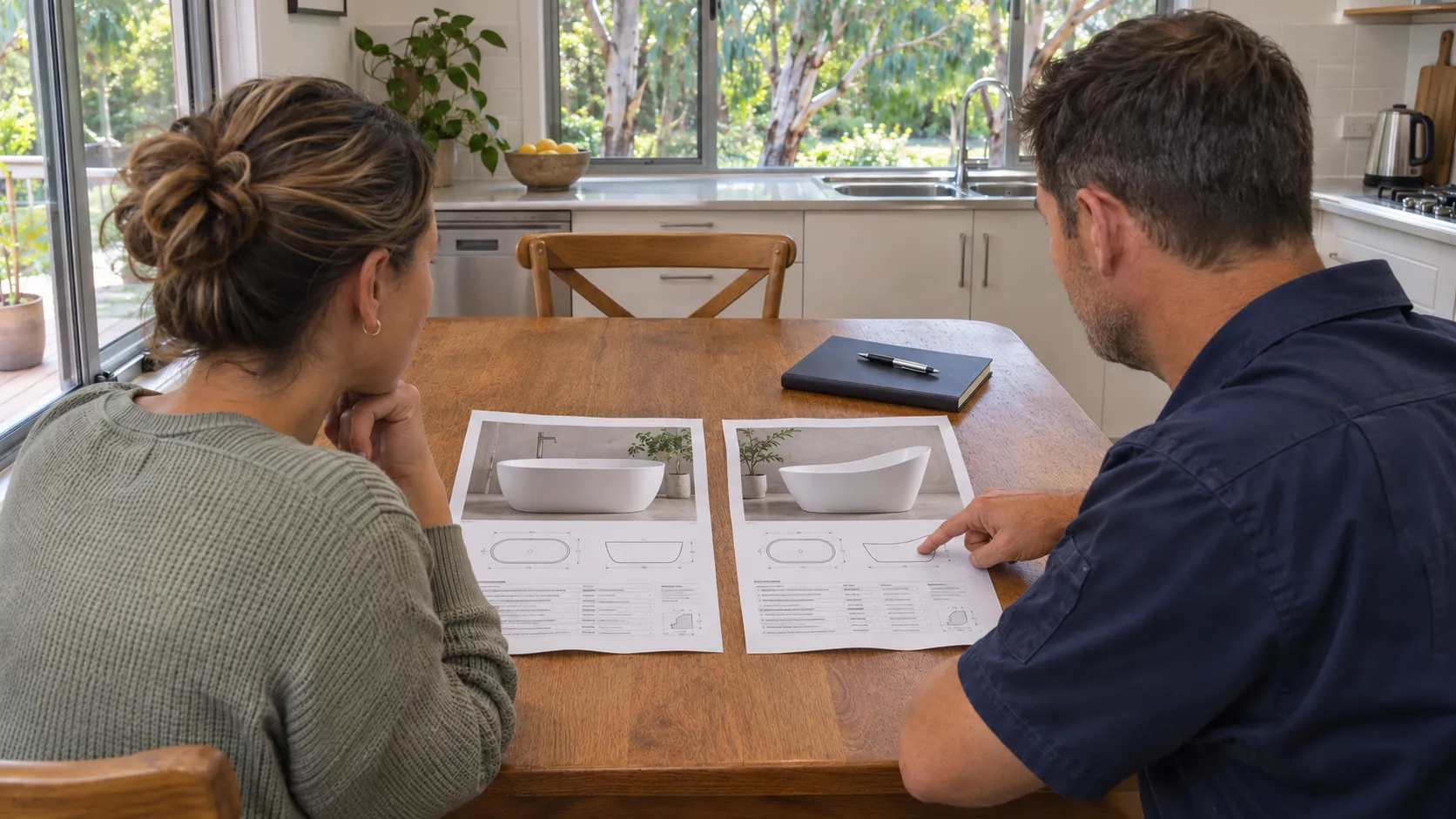
Rather than treating the bath and hot water system as unrelated purchases, consider them together. A suitable assessment should explain what the current setup can reasonably support, which limitations may affect performance and what any proposed upgrade is intended to improve.
Choosing a Lower-Volume Bath When Capacity Is Limited
A smaller external footprint is not the only way to reduce water demand. A narrower interior, shaped seating area or supportive bathing position may provide the desired comfort at a lower usable volume.
Compare models at a realistic bathing level rather than choosing solely by maximum depth. If the bath is rarely filled near its overflow, paying for additional capacity may offer little practical benefit. However, choosing a shallow model will not solve the problem if deep immersion is the main reason for replacing the existing bath.
Consider who will use the bath most often and whether the selected shape provides a comfortable position. A design that requires less water for one occupant may not suit another. Capacity should be considered alongside access, bathing position and the available bathroom space.
Keep more than one option open until the plumbing assessment is complete. Comparing two or more baths with documented usable volumes provides a practical way to weigh comfort against household demand without immediately committing to equipment changes.
Professional Assessment of a Suitable System Upgrade
If the preferred bath exceeds what the existing supply can comfortably support, ask for the reasoning behind any recommended upgrade. A larger storage tank, improved recovery capability or a different system type may address different performance limitations. None should be selected based on bath volume alone.
The assessment should account for household peak demand, incoming water conditions, available delivery rates and the suitability of the existing plumbing. Pipework changes, system sizing and temperature-control work should be handled by professionals. Any associated electrical or gas work also requires the licensed trade.
When comparing providers for a plumber in Brisbane, ask whether their assessment covers bath volume, household demand and filling performance. Request a clear scope of work that identifies the specific limitation each recommendation is intended to address. Increasing stored volume may improve total hot water availability without making the bath fill faster. Improving delivery flow may shorten filling time without leaving enough hot water for later showers.
A deep bath can place demands on a household's hot water supply, but its suitability depends on more than its advertised capacity. Usable bathing volume, stored hot water, recovery time, household routines and filling speed all influence if the finished bathroom will provide a comfortable experience. Assessing these factors can prevent unexpected limitations and unnecessary system upgrades. Plumbing Inspectors evaluates existing plumbing and hot water arrangements, identify potential performance issues and determine what changes may be needed to support their preferred bath.