

What Are the Signs of a Damaged Sewer Line?
A damaged sewer line can show several warning signs before a major failure occurs. Recurring blockages, slow drains, unpleasant odours, unusual pipe noises and changes in toilet performance may all point to an underlying problem. Recognising these signs early can help prevent more serious damage and costly repairs.
Plumbing Inspectors can assess these warning signs and help identify whether the problem is linked to cracks, root intrusion, leaks or other sewer line damage. Early inspection can also help prevent issues from progressing into property damage, contamination or a complete pipe collapse.
For properties seeking a plumber in Brisbane, knowing when common plumbing problems may indicate sewer line damage can help prompt the right response. Early professional assessment can identify the cause and determine whether cleaning, repair or replacement may be required.
Common Warning Signs of Sewer Line Damage
Sewer line problems can develop gradually, making early symptoms easy to overlook. Recurring drainage issues, unusual sewer odours and changes to the surrounding ground can all suggest that the main sewer line needs professional assessment.
Recurring Blockages and Backups
Frequent blockages affecting multiple fixtures are more concerning than an isolated slow drain. Toilets that repeatedly clog, gurgling drains and water backing up in a shower, floor drain or tub when another fixture is running may indicate a restriction in the main sewer line.
Backups occurring at the lowest point of the property can be concerning, as they may point to an obstruction or damaged section of pipe rather than a localised drain issue.
Sewer Odours and Gurgling Sounds
Persistent sewage odours around toilets, floor drains, foundations or outdoor areas may indicate a leak or damaged sewer line. Gurgling or bubbling from multiple drains after flushing or using large amounts of water, can also suggest restricted wastewater flow and trapped air within the system.
Wet Ground and Changes Around the Property
Sewer line leaks can cause unexplained wet spots, unusually lush grass, standing water or sewage-like odours along the pipe route. If a damaged line runs near a building, leaking wastewater may also contribute to soil erosion, ground settlement or movement around paving and landscaping.
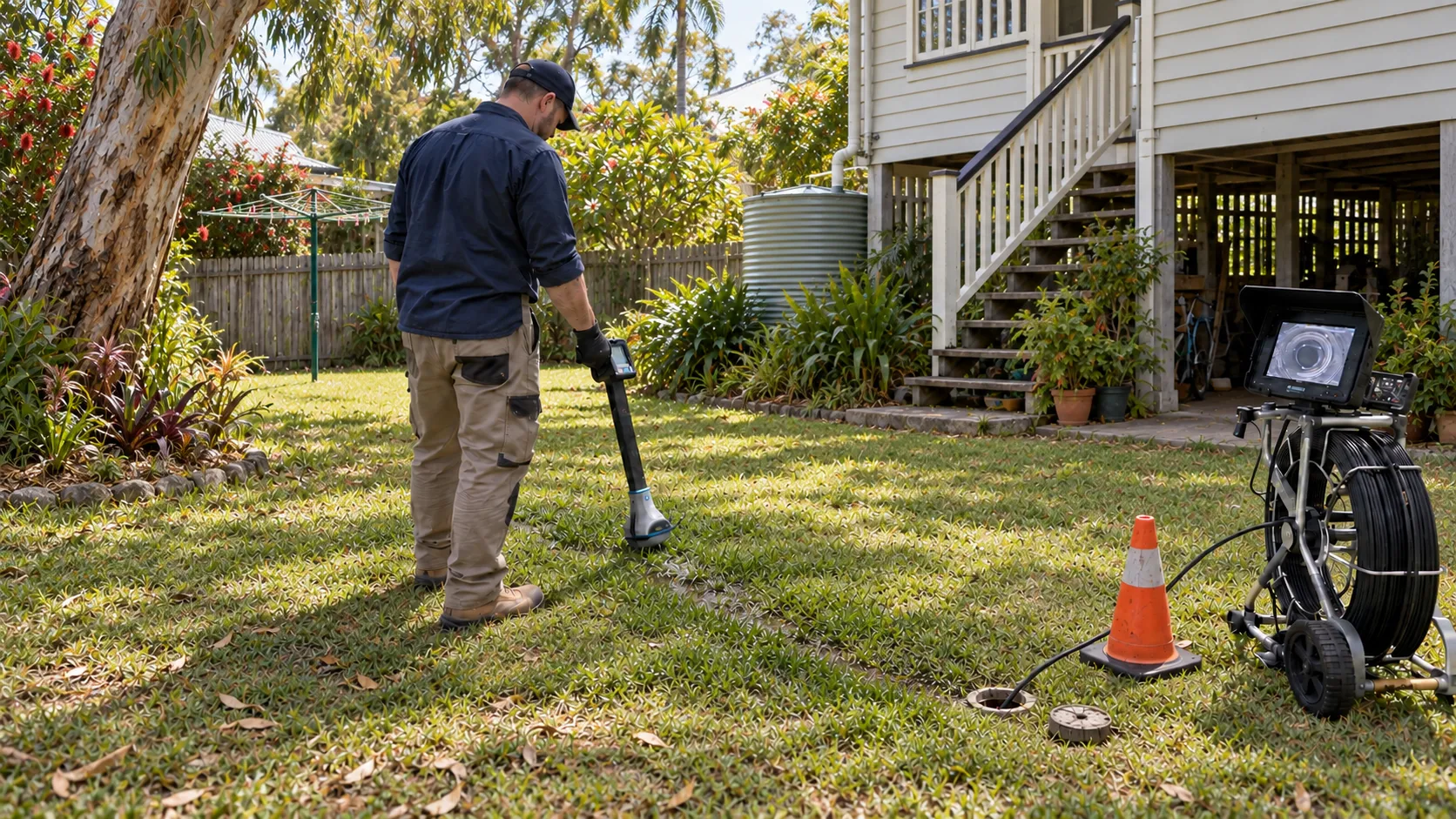
When several of these signs occur together, professional inspection can help determine whether the issue is a localised blockage or a more vital sewer line defect.
What Causes Sewer Lines to Crack, Collapse or Deteriorate?
Sewer lines can deteriorate for several reasons, including age, ground movement, tree roots and improper use. Pipe material, surrounding soil and installation conditions can all affect how quickly problems develop.
Age and Pipe Material
Older sewer lines are more vulnerable to cracking, corrosion and joint failure. Clay pipes can become brittle and develop gaps between sections, while cast iron can corrode and weaken over time. Modern PVC and ABS pipes can also develop damaged joints or deformation when exposed to excessive pressure or poor installation conditions.
Soil Movement and External Pressure
Ground movement can place ongoing stress on underground sewer pipes. Expansive soils that repeatedly swell and shrink may shift or crack pipes, while soil erosion or settlement can leave sections unsupported. This may cause pipes to sag, creating low points where wastewater and debris collect.
Heavy traffic, construction activity and poorly compacted soil above a sewer line can also place additional pressure on the pipe, potentially increasing the risk of cracks, joint damage or collapse.
Tree Roots and Improper Use
Tree roots can enter sewer lines through small cracks or gaps in joints, where they continue to grow and restrict wastewater flow. Eventually, root growth may worsen existing damage and contribute to recurring blockages or pipe failure.
What enters the drainage system can also affect sewer line condition. Grease, fats, wipes and other unsuitable materials can build up inside pipes and cause persistent blockages. Harsh chemicals may also contribute to deterioration in older or already weakened pipework.
These factors can help explain why sewer problems develop and why recurring drainage issues may require more than routine drain cleaning.
Can Tree Roots Damage a Sewer Line?
Yes. Tree roots can damage sewer lines by entering through small cracks, loose joints or damaged seals in search of moisture. Once inside, the roots can grow and form dense masses that restrict wastewater flow and contribute to recurring blockages.
Urban Utilities explains that tree roots can enter sewer pipes while searching for water and nutrients, particularly where cracks, gaps or damaged joints provide access.
Root intrusion can also make existing sewer damage worse. Growing roots may widen cracks or gaps and allow soil and debris to enter the pipe, increasing the risk of leaks, further blockages or structural failure. Older clay and other ageing sewer lines can be vulnerable, although newer pipes may also be affected when joints or seals become damaged.
Learning more about tree root intrusion in underground drains can help explain why clearing the roots may not provide a permanent solution when cracks or failed joints remain.
Recurring blockages, multiple slow drains, gurgling toilets and sewer odours may point to root intrusion. A sewer camera inspection can help confirm whether roots have entered the line and assess the extent of any underlying damage.
How Sewer Line Damage Differs From a Simple Blockage
A simple blockage usually affects one fixture or a small section of pipe, while sewer line problems can affect multiple fixtures throughout the property. Recognising the difference can help determine whether routine drain clearing is likely to resolve the issue or whether further investigation may be needed.
Multiple Fixtures and Recurring Problems
A blocked kitchen sink or bathroom basin is more likely to involve a localised obstruction. Sewer line problems become more likely when several fixtures are affected when toilets, floor drains or showers back up when water is used elsewhere in the property.
Problems that return soon after drain clearing may also suggest an underlying sewer line issue. Gurgling toilets, multiple slow drains and persistent sewer odours can provide further clues.
Signs That Point to Sewer Line Damage
A simple blockage will often improve after appropriate drain clearing, while a damaged sewer line may continue to cause problems or only improve temporarily. Structural defects, root intrusion or collapsed sections generally require more than plunging or routine drain cleaning.
Outdoor signs such as soggy or sunken ground, sewage odours or wastewater around a sewer access point may provide further evidence of a damaged line. When these symptoms occur alongside recurring internal plumbing problems, a professional inspection, potentially including a sewer camera inspection, can help identify the underlying cause.
What Problems Can a Damaged Sewer Line Cause?
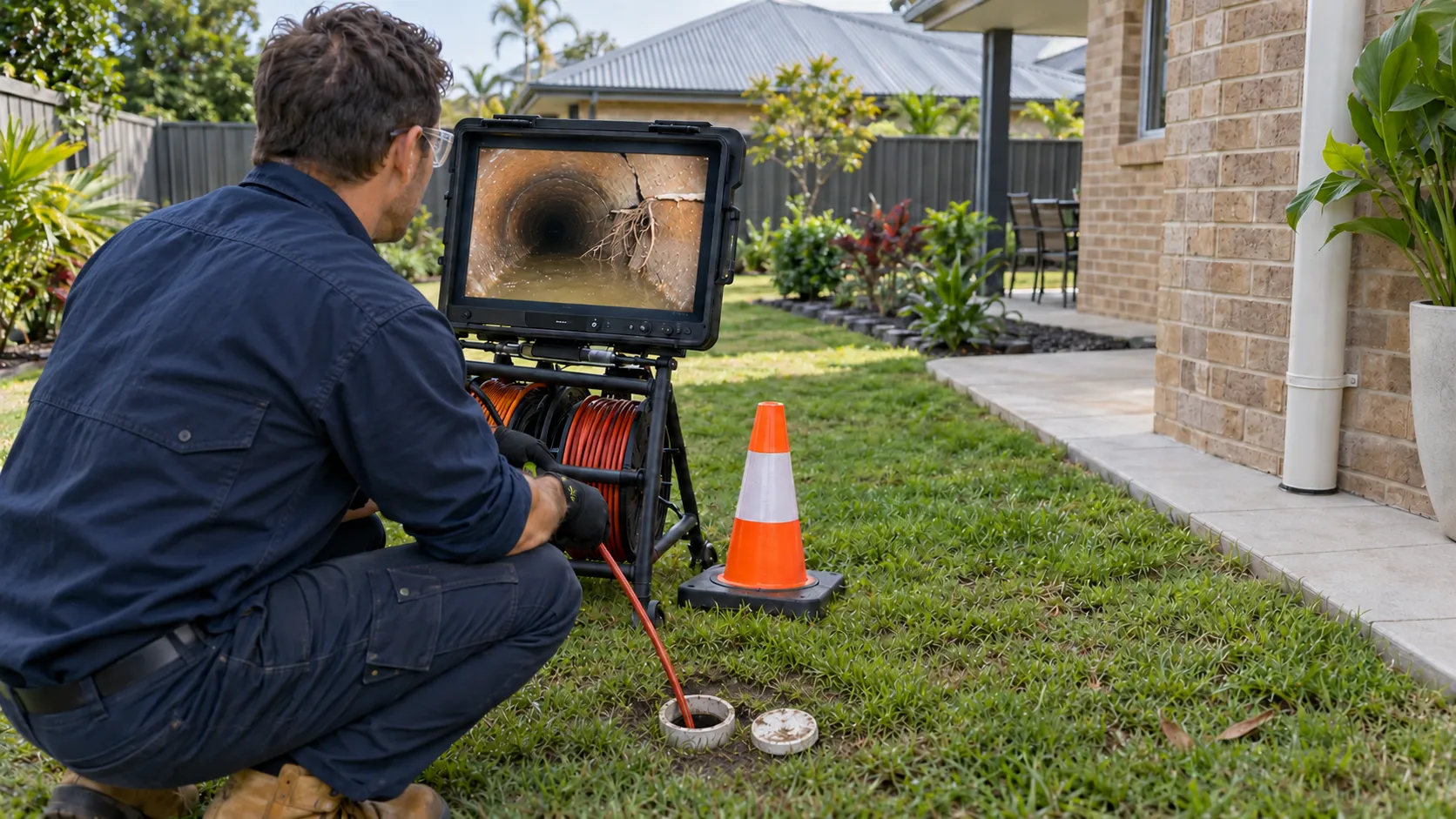
A damaged sewer line can cause more than recurring drainage problems. Cracks, leaks, root intrusion and collapsed sections can restrict wastewater flow, cause sewage to back up into the property or allow wastewater to escape into the surrounding ground. If left unresolved, these problems may contribute to property damage, contamination and more extensive repairs.
Backups and Drainage Problems
Damaged or restricted sewer lines can prevent wastewater from flowing away from the property properly. This may cause multiple fixtures to drain slowly or sewage to back up through toilets, showers and floor drains. Repeated backups can become increasingly disruptive and may continue even after routine drain clearing.
Leaks and Property Damage
Cracked or separated pipes can allow wastewater to escape into the surrounding soil. This may cause wet ground, unusual vegetation growth, unpleasant odours and soil erosion. Where the sewer line runs close to a building, prolonged leakage may contribute to ground movement or affect nearby paving, landscaping or other structures.
Severely damaged or collapsed sections may also require excavation, particularly when the pipe runs beneath concrete, driveways or other structures. Early detection may help limit the extent of repairs and property disruption.
Contamination and Health Concerns
Sewage escaping from a damaged line can contaminate surrounding soil and create unsanitary conditions. Backups inside the property may also expose occupants to contaminated wastewater, while persistent sewer odours can indicate escaping sewer gases.
Brisbane City Council’s sewage overflow guidance advises people to avoid contact with raw sewage and arrange a licensed plumber when a sewage leak is located on private property.
Prompt professional assessment can help identify the source and severity of the damage and determine whether cleaning, localised repair or sewer line replacement may be appropriate.
How Can Sewer Line Damage Be Prevented?
Not all sewer line damage can be prevented when ageing pipes, ground movement or existing defects are involved. However, good maintenance and careful use of the plumbing system can reduce the risk of blockages, root intrusion and premature deterioration.
Use Drains Carefully and Manage Nearby Vegetation
Grease, fats, oils, wipes and other unsuitable materials can build up inside sewer pipes and contribute to blockages. Disposing of these materials appropriately and avoiding unsuitable items down drains can help reduce unnecessary strain on the system.
Trees and large shrubs planted close to sewer lines can also increase the risk of root intrusion where older pipes have cracks or damaged joints. Considering vegetation placement and monitoring root growth may help reduce this risk.
Address Plumbing Problems Early
Recurring blockages, slow drains, gurgling toilets and sewer odours should not be treated as isolated issues when they continue to return. These symptoms may indicate root intrusion, cracks, damaged joints or other problems within the main sewer line.
Early professional assessment can help identify developing defects before they contribute to major blockages, leaks or pipe collapse. A sewer camera inspection may be appropriate when problems persist after routine drain clearing or affect multiple fixtures.
Inspect Older or Problematic Sewer Lines
Older properties and sewer lines with a history of recurring problems may benefit from periodic professional inspection. Camera inspections can identify cracks, root intrusion, sagging sections and other defects without requiring extensive excavation.
Preventative measures cannot eliminate every cause of sewer line damage, but regular maintenance and early assessment can help identify problems sooner and reduce the risk of more extensive repairs.
How Do Plumbers Diagnose a Damaged Sewer Line?
Diagnosing a damaged sewer line usually starts with the symptoms and becomes more detailed if the cause is not immediately clear. Plumbers assess where problems occur, whether multiple fixtures are affected and how the drainage system responds before using specialised equipment to locate and assess the damage.
A structured inspection can help distinguish a simple blockage from problems like cracked pipes, root intrusion, damaged joints or collapsed sections. It can also help identify the location of a suspected defect before repair work or excavation begins.
Initial Assessment
The first step is to review the property's drainage problems, including recurring blockages, slow drains, gurgling toilets, backups and sewer odours. When several fixtures are affected on the lowest level, the main sewer line may be involved.
Plumbers may also run multiple fixtures to observe how the system responds. Water backing up through a floor drain or a toilet bubbling when another fixture is used can suggest restricted flow in the main line.
Checking and Clearing the Line
Where appropriate, the sewer line may be cleared to determine whether a blockage is causing the problem. If the issue cannot be cleared or quickly returns, further investigation may be needed to check for an underlying structural defect or root intrusion.
Sewer Camera Inspection
A sewer camera inspection allows the inside of the pipe to be examined without extensive excavation. The camera can identify cracks, separated joints, root intrusion, collapsed sections, standing water and other defects.
Understanding what a CCTV drain inspection can reveal can help property owners see how plumbers identify cracks, root intrusion, separated joints, sagging pipes and collapsed sections.
Many sewer camera systems can also help locate a defect from above ground. This can help determine where repairs or excavation may be required and reduce unnecessary disruption to the property.
Further Testing When Required
Additional testing may be appropriate when the source of a leak or connection problem is unclear. Depending on the situation, plumbers may use locating equipment, dye testing or other diagnostic methods to investigate suspected leaks and identify the sewer line route.
Once the cause and location of the problem have been confirmed, the appropriate repair or replacement option can be determined.
What Repair Options Are Available for a Damaged Sewer Line?
The right repair for a damaged sewer line depends on the location, material and extent of the problem. Minor defects may only require a localised repair, while more extensive damage may call for trenchless rehabilitation or full pipe replacement.
Professional sewer repair services can identify the damaged section and determine whether a localised repair, pipe relining or complete replacement is appropriate.
Localised Repairs
A localised repair may be suitable when the damage is limited to a short section of an otherwise sound sewer line. Cracks, separated joints or isolated root intrusion can sometimes be addressed by replacing only the affected section.
.webp)
Targeted repairs can reduce excavation and property disruption when a sewer camera inspection has accurately located the damaged area.
Trenchless Pipe Repair
Trenchless methods can repair or rehabilitate some sewer lines without excavating the entire pipe route. Pipe lining creates a new pipe within the existing one and may be suitable for some cracked or leaking pipes that remain structurally sound.
This approach can reduce digging and restoration work, but it is not suitable for every sewer line. Severe collapse, major deformation or incorrect pipe grading may require conventional replacement.
Pipe Replacement
Extensive cracking, repeated failures, severe collapse or incorrectly graded pipes may require replacement. Depending on the site and condition of the existing pipe, pipe bursting may provide a less disruptive replacement option, while traditional excavation may be necessary where trenchless methods are unsuitable.
Although full replacement involves more excavation, it allows the damaged pipe and surrounding ground conditions to be addressed together. The most suitable option can be determined after the condition and location of the sewer line have been professionally assessed.
When Does a Sewer Line Need to Be Replaced?
A sewer line may need to be replaced when damage is too extensive for localised repairs to provide a practical solution. Recurring blockages, ongoing leaks and repeated backups can indicate that the underlying pipe has deteriorated beyond straightforward repair.
Signs Replacement May Be Necessary
Repeated problems that return soon after professional cleaning may indicate cracks, root intrusion, collapsed sections or other structural defects. Persistent sewer odours, sewage backups, soggy ground and visible wastewater can also point to leaks or pipe damage.
Replacement may be considered when an inspection identifies:
- Multiple cracks or broken sections
- Severely damaged or separated joints
- Significant root intrusion
- Collapsed or badly deformed sections
- Repeated failures along the same sewer line
Age and Overall Pipe Condition
Older sewer lines made from materials such as clay or cast iron may become vulnerable to cracking, corrosion and joint failure. If deterioration is widespread, repairing individual defects may only provide a temporary solution.
A sewer camera inspection can help determine the extent of the damage and whether the existing pipe remains suitable for repair. When structural deterioration is widespread or repairs are no longer practical, replacement may be the more appropriate long-term option.
Recognising the signs of a damaged sewer line can help prevent costly repairs, property damage and potential health concerns. Recurring blockages, slow drains, gurgling toilets, sewer odours, saturated ground and tree root intrusion may all point to an underlying issue that needs further investigation.
Plumbing Inspectors can assess these warning signs and determine the cause and extent of sewer line damage. Early professional inspection can help identify problems before they lead to major blockages, leaks or structural damage, while helping determine whether repair or replacement is appropriate.

.webp)