

Blocked Drains in Brisbane Homes: What Repairs Really Involve and When Problems Run Deeper
Blocked drains in Brisbane homes often indicate underlying pipe damage rather than a simple obstruction. This article is for Brisbane homeowners who are dealing with recurring drain blockages and want to understand what is actually happening below ground. It matters because repeatedly clearing a blocked drain without addressing the root cause can lead to higher repair costs, property damage and unexpected plumbing emergencies.
At Plumbing Inspectors, we see this daily, which is why this guide explains what blocked drains in Brisbane really involve, how to tell when problems run deeper and when proper drain repairs are the only effective solution.
Why Blocked Drains Are Often a Symptom of Larger Issues
Blocked drains can feel like a straightforward issue: something is stuck, water won’t flow properly and the fix is to clear it out. But in many Brisbane homes, a blockage is often your plumbing system’s way of warning you that the drain line itself may be deteriorating, shifting, or being invaded by tree roots.
This is particularly common when the issue happens more than once, affects multiple fixtures, or returns soon after being cleared. In those cases, the blockage is often only the symptom, not the cause. Understanding the difference helps homeowners avoid the frustrating cycle of repeated callouts that never really solve the problem.
The Difference Between Isolated Blockages and Ongoing Drain Failures
A one-off blockage usually comes down to normal household build-up. It clears well and stays clear for a long time. These issues are inconvenient, but they’re often not serious.
Ongoing drain failures are different because the drain system has changed physically. The inside of the pipe may be cracked, collapsed, separated at the joints, or misaligned, which creates rough edges or low points where debris repeatedly catches.
A simple way to think about it is this: isolated blockages happen because of what goes down the drain, but ongoing failures happen because of what has happened to the drain itself.
Why Repeated Drain Clearing Does Not Resolve Structural Problems
Drain clearing is useful, but it has limits. If the pipe is structurally compromised, clearing only restores flow temporarily, because the broken area continues catching debris or allowing roots in.
If a drain keeps blocking after it’s cleared, there are usually only a few reasons:
- The pipe is cracked or deformed.
- A joint has shifted or separated.
- Roots are repeatedly entering through the same weak point.
In these situations, repeated clearing becomes an expensive short-term fix. It is often more cost-effective to inspect and repair the drain properly than to keep paying for the same problem in slightly different forms.
Drain Pipe Failures Commonly Found in Older Brisbane Properties
Brisbane has many older homes with drainage systems installed decades ago. Even if bathrooms or kitchens have been renovated, the underground drain lines often remain original, meaning the home may still rely on clay, earthenware, or early PVC pipework.
Older drain pipes can function fine for years, then suddenly begin failing due to age, soil movement, or changes around the property like new landscaping. This is why blocked drains are especially common in established suburbs, where trees are mature and ground conditions have changed over time.
Deterioration of Clay, Earthenware and Early PVC Drain Pipes
Older Brisbane drainage systems often contain clay and earthenware, which are strong but brittle. Over time, these pipes can crack or fracture underground, especially where joints exist. Once a crack forms, it becomes an entry point for roots and an edge that catches debris.
Early PVC pipes improved flexibility but still have vulnerabilities. In some installations, the pipe grade was not supported properly, leading to sagging. In others, joints weaken with age and movement.
This deterioration usually doesn’t announce itself loudly. Most homeowners only notice it through symptoms like slow drainage, frequent gurgling and recurring blockages.
The Impact of Soil Movement and Tree Root Intrusion on Drain Stability
Soil movement is one of the biggest hidden causes of drain failure. Brisbane weather patterns, especially heavy rain and storms, can cause ground to shift and soften. Over time, the weight of soil pressure and shifting foundations can pull pipe joints apart or create cracks along stress points.
Tree roots are equally common. Roots naturally chase moisture, and drains provide it. Even the smallest crack or joint opening can become a root entry point. Once inside, the roots expand, trap waste and create recurring blockages that get worse over time.
This is why homeowners often experience a pattern: the drain blocks, it’s cleared and then it blocks again within months because the roots return.
How CCTV Drain Inspections Inform Repair Decisions
Once blockages are recurring, the most important thing is to stop guessing. A CCTV drain inspection provides proof of what is going on inside the pipe, where the fault is located and how serious the damage is.
In Brisbane homes, CCTV inspections are especially valuable because many properties have longer underground lines between the home and the boundary connection. Without inspection, repairs can become costly trial and error. With inspection, the repair becomes targeted and planned.
Identifying Collapsed, Cracked and Misaligned Pipe Sections
CCTV inspections allow plumbers to see the pipe condition clearly. They can identify cracks, root intrusion points, joint separation and collapsed sections that would otherwise be invisible.
The biggest value for the homeowner is accuracy. Instead of digging up large areas “just to find the problem”, the inspection helps locate the exact fault and the correct depth, which reduces disruption and prevents unnecessary excavation.
Using Visual Evidence to Select the Correct Repair Method
Once the internal condition is confirmed, the repair method becomes much clearer.
For example:
- If the pipe is intact and the issue is internal build-up, clearing may be sufficient.
- If roots are entering through a joint, the damaged section should be repaired or replaced.
- If the pipe is cracked or misaligned, repairs are required to prevent ongoing snagging and repeat blockages.
- If a section has collapsed, excavation is usually unavoidable.
In other words, CCTV provides the evidence needed to stop paying for temporary fixes and start solving the real cause.
When Drain Clearing Is No Longer an Effective Solution
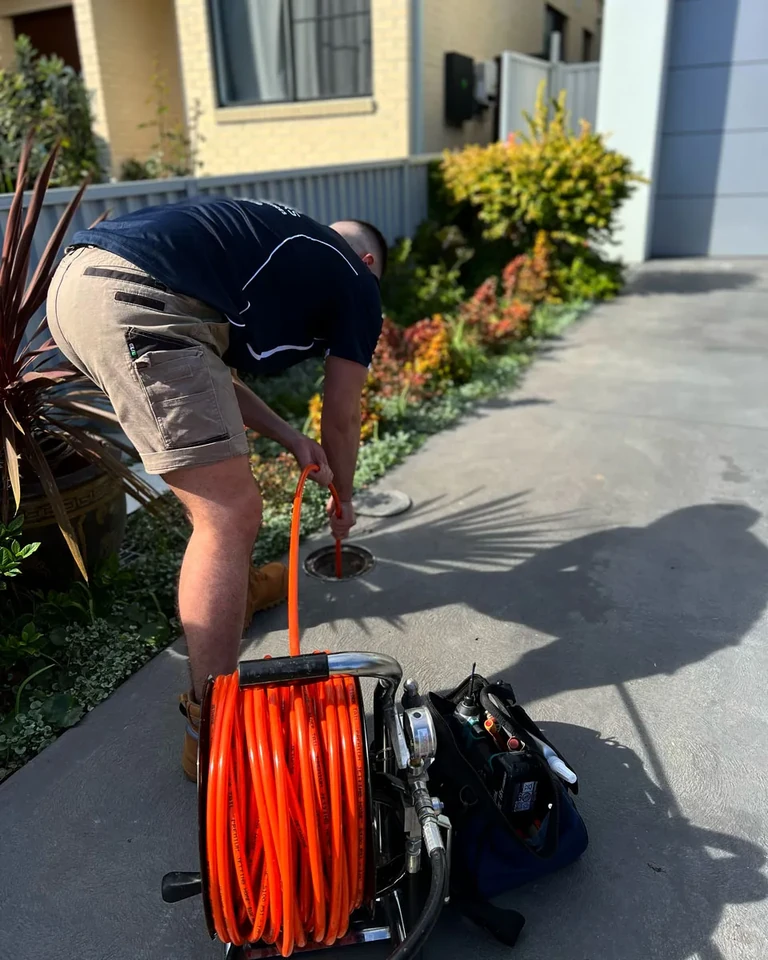
Drain clearing works best when the drain system is structurally sound. Once the pipe is cracked, collapsed, or misaligned, clearing becomes a short-term reset, not a long-term solution.
This is why some homes seem to “always have blocked drains,” even when the residents are careful. The pipe isn’t failing because of household behaviour; it’s failing because the system is compromised.
Warning Signs That Physical Drain Repairs Are Required
Some signs are subtle at first, but they tend to build over time. The most important thing is recognising when a blockage is no longer a one-off issue.
Physical drain repairs may be required if:
- The drain blocks more than once in a year.
- Multiple fixtures drain slowly at the same time.
- Toilets bubble when sinks or showers run.
- Foul odours return quickly after clearing.
- Outside gully traps overflow during regular use.
If you notice more than one of these at once, clearing alone is unlikely to solve the problem.
Risks of Continued Use of a Structurally Compromised Drain
Using a compromised drain can lead to major consequences. Once the pipe integrity is lost, it becomes easier for roots to enter, debris to snag and wastewater to back up.
Beyond inconvenience, there are real risks, including sewage overflow, contamination in the yard, water damage under the home and increased costs if the pipe collapses fully. The longer the issue continues, the higher the chance the repair shifts from a planned job into an emergency situation.
What Excavation-Based Drain Repairs Involve
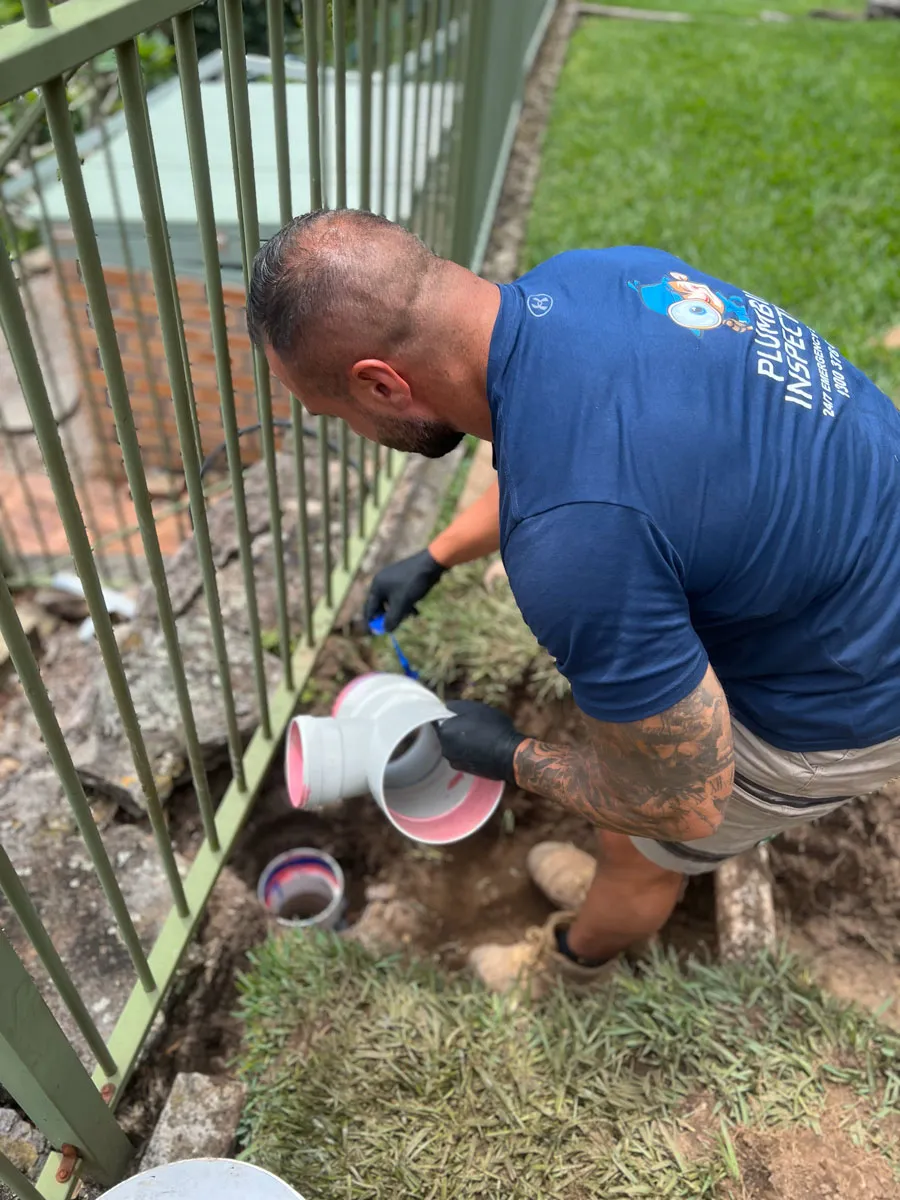
If CCTV confirms major cracking, collapse, or significant misalignment, excavation-based repairs are often the most reliable solution. While excavation may sound disruptive, it is often the best way to permanently remove damaged pipe sections and restore full drainage function.
Most homeowners are surprised by how targeted these repairs can be when inspections are done properly. It is rarely about digging up the entire yard. Instead, the focus is removing only what has failed and reinstating the line properly.
Access Planning, Pipe Replacement and Ground Reinstatement
Excavation-based drain repairs involve more than replacing pipe. Done properly, it’s a structured process that ensures the drain line won’t settle and fail again.
At a high level, the work involves:
- Locating the fault using inspection and tracing
- Excavating to access the damaged section
- Removing failed pipework
- Replacing it with compliant modern materials
- Reinstating the ground properly
Reinstatement is critical. If the ground is not backfilled correctly, the drain can settle over time, creating low points that cause new blockages.
How Proper Repairs Restore Flow and Prevent Recurring Blockages
Proper repairs eliminate the damaged sections that catch debris and allow roots in. Once the line is repaired, water flow becomes consistent again and blockage risk is drastically reduced.
Long term, this prevents the cycle of repeat callouts and protects the home from avoidable emergencies. It also gives homeowners confidence that the problem has been genuinely solved, not temporarily pushed down the line.
Blocked drains in Brisbane homes are not always caused by simple build-up, and repeated blockages often point to deeper issues like cracked pipes, misalignment, root intrusion, or collapse. Clearing may restore flow temporarily, but it won’t fix a failing drain line. At Plumbing Inspectors, we encourage homeowners to treat recurring blockages as a warning sign and use CCTV evidence to make informed repair decisions, because proper repairs are what truly restore flow, protect the property and prevent the problem from returning again.

.webp)